How To Prepare For Outdoors Winter Workout

How To Prepare For Outdoors Winter Workout


Training outdoors in winter is a matter of experiencing the world from a different angle. There are a few things about the environment to consider when you take on winter training.


Temperature

You know it’s cold already, but knowing the temperatures will help you with more than just on the day.

You learn about your body, how it behaves at certain temperatures, what it needs and when it is time to push cold weather conditioning, if that is what you want.

You also keep track of your progress in terms of changes in your overall body temperature as your body acclimatizes to harsh weather.

Knowing the temperature will help you decide on the type of kit you will be using. And knowing how your body is accustomed to certain temperatures you will know that when others feel cold for you it’s comfortable, or the other way around.

Numbers are your guidelines.


Environment

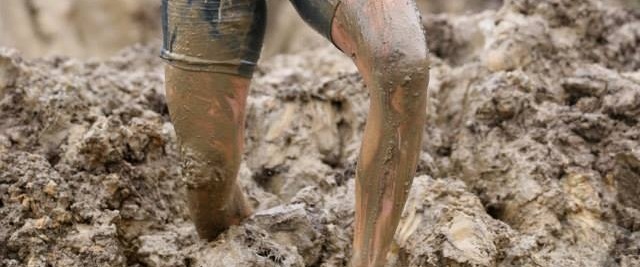
Temperature is one aspect. The other is whether it’s wet, dry, foggy, raining or snowing, muddy or ice under the snow. So the ground and general weather conditions.

Knowing this will help you decide on the layers you will wear, the type of shoes you will wear and other accessories you may need.

Don’t over think things. You don’t need 100 pairs of shoes and layers. Have one main kit for winter and one for summer. In the next blogs I will be talking about winter training equipment.


Timing

When we workout outdoors in winter we must not forget it gets dark earlier and the sun rises later. Now it’s light, 45 minutes later is dark.

If it gets dark while you are in the park or the forest it can get dangerous, for both men or women.

I was lucky to have been coached by an experienced coach and learnt what to look out for.

You must time your workout to make sure you are well equipped. A head torch with you is one of the best pieces of equipment to have in winter.

1. EXPERIENCE THE WORLD FROM A DIFFERENT ANGLE

Contact me if you are in need of more advice.


How To Train Outdoors This Winter

How To Train Outdoors This Winter


The previous article was on why you should ditch the gym this winter. Now I will share with you 3 ideas of how to train outdoors with winter.


1. Running

If you choose to go without and experiences coach, although you should consider it, running is the easiest way to begin with.

Mind that there is a running technique to run on wet or muddy surfaces or through snow and over ice. That’s why I advise working with an experienced coach who specialises in outdoors training. This is what I specialize in, so contact me.

However, here are some tips to consider, whether there’s mud or snow:

– keep your feet underneath your body

– small strides

– go slow

– don’t push off the back foot, lift the foot off the floor

Actually all four conditions are met if you keep small strides.

3. Think Live And BreatheOut Of The Box

2. Ditch the gym equipment

Leave the gym in the box, you are outdoors now so you leverage nature. Not in a bad, disrespectful way, not at all. You can use equipment such as longs and rocks for weight training for example.

Don’t use benches. Honestly, when I see people in the park using benches for step ups, why are they even outdoors.

Get creative and think outside the box.


3. Get your hands dirty

Want to condition your spirit and mind? There is nothing more wonderful than crawling on the ground with no gloves on. Your hands will get cold, but they will condition.

Besides, in London, winter is not as bad as in other parts of the world.

Cold is a matter of perception. Like walking over fire or walking on broken glass, don’t try these as home though. Physical conditioning is about getting the body used to certain temperatures, or a certain training routine.

Mental conditioning is about getting the mind to see things from a different perspective.

That doesn’t mean you hands have to go numb, but a little cold will only get the blood moving. Get gloves if it’s too bad, in time your body temperature will adjust.

The topic of one of the upcoming blogs is how to prepare for outdoors winter training and what to do after.


This winter, think, live and breathe outside of the box.

As usual, contact me if you need more advice or want to discuss more on the topic.


Why You Should Ditch The Gym This Winter

Why You Should Ditch The Gym This Winter


A few years ago I used to only run, all year round, outdoors. On snow and ice, rain and heat. The last few years have witnessed a massive shift in my training methods, my fitness in general and my coaching style and philosophy.

I am talking about a different type of fitness. I am talking about fitness that, besides getting you really fit, it also teaches you many, many lessons, about yourself, your body and it give you the chance to reflect.

So why am is so set on outdoors training? Here are a few reasons that might convince you that training outdoors is one of the best decisions you would ever make, and training outdoors in winter:


Different kind of fitness

A couple of months ago I pulled a muscle. I’ve been through it before so I know how a pulled muscle, and even pulled tendon, feels like.

A pulled muscle takes weeks to heal. I was shocked at how fast my body heals these days. In 3-4 days I could walk without limping and within 1n week I was recovered and ready to get back to my training routine as usual.

Now this is the kind of fitness I am talking about. For me and my clients fitness now means: cardiovascular and strength (including weight training) BUT it also means:

– training the body from all different angles; terrain is never the same, you never o the same exercise, every time you place your foot or hand on the ground muscles work in a slightly different way, strengthening from many different angles

– get the body prepared to withstand and recover faster from things such as sprains, pulled muscles

– awareness

– increasing the body’s natural healing abilities

– understanding the basics of biomechanics, just enough to understand why some things are good for the body and some are not

And these are only some of the benefits of training outdoors. You can learn these in the gym as well. But nothing compares with the diverse, wavy terrain, when you walk and run. It teaches you a lot about your body.

But what does this have to do with winter? This leads me to the next point:

5. Winter - IT'S TIME TO PUSH YOUR BOUNDARIES - Copy5. Winter - IT'S TIME TO PUSH YOUR BOUNDARIES - Copy

Challenge your body

Winter is not comfortable. It pushes you out of your comfort zone in many different ways.

First there is the physical as in cardiovascular and  strength. Training in harsh conditions takes a lot, a lot of energy. Maybe it will not make you sweat but you WILL work really hard.

Second, is at the mind level. Waking up at 5 am and going out there on rain or snow is not easy and it is not for the faint of heart, as the saying goes. The reality is that this is not for everyone.

Don’t get me wrong. Absolutely ANYONE can do this, except the people who want to be comfortable in a warm, and nice environment such as the gym or their house.

The mental strength, the dedication to your outdoors winter training will impact absolutely ALL areas of your life. Period. All of them: social, work, business, self esteem and self confidence, they way you present in front of audiences and so on.

Third. The unwavering spirit. THIS is the substance. The elements that we cannot easily see. Honestly I find it difficult to explain how outdoors winter training conditions the spirit. It’s such a deep and complex concept.

Meditation, while we do it, it’s not what I am talking about. I am talking about the spirit of a warrior. That’s the only way I can describe it.

What I can say is that outdoors winter training is the most important element in my life and that changed everything. The way I interact with people, they way I see and love myself, my self confidence, my ability to stand up for myself.

It changed the very essence I am made of. Sounds weird right? There is no other way I can explain it really.

BUT, there is a catch. Do the same exercises you do in the gym and the magic disappears. The trick is to adapt your training to the outdoors and do things in a different way, and not in the comfortable way. This is the topic of the next blog.


Bottom line. Outdoors winter training will condition your body, your mind and your spirit to a level you have never experienced before. This was my experience after training indoors for many, many years.

This winter push your boundaries. Contact me for more information on how to start your winter training program


How To Improve Your Posture

How To Improve Your Posture


It is not enough to have a strong core alone. It is not enough to do just crunches and situps or just squats and lunges. Here are the different aspects when it comes to improving your posture and attain a stronger and healthier body.


Core exercises

Many people go for crunches and situps because they are straight forward. You cannot lift yourself if you don’t tense your abdominal muscles. So there is not much thinking and it’s all bout repeating it.

However crunches and situps, while they can strengthen your abs, can also harm your back and your neck.

Here are some suggestions of core strengthening exercises: mountain climbers, planks and variations, pressups and variations, hanging leg lifts.

Crawls. Besides the fact that they are safe on the back, they work  your core (that includes your back) as well as the rest of your body….if done properly that is. That means hips down and knees close to the ground, among many other technical points. This is something I teach in detail in the videos in The Academy.

Another exercise is rope skipping. Can be fun and works your whole body.


Variation

While it is important to practice, or to repeat your core exercises, do not limit yourself to just 4 or 5 types. Anything in exaggerated amount can be detrimental.

And variation will also train your body in a multilateral way, meaning from different angles.

For example you may have a core workout that consists of exercises such as planks and pressups under many variations.

Another core workout can be crawls. They still workout your core muscles and actually they do it better, if you ask me.

And another can be hanging, hanging leg lifts, pulls ups and chin ups. Yes all these work your core, not only your arms.

Multilateral training.


Mobility and flexibility

Sure, now you have a strong core. But do you walk with your shoulders dropped forwards?

Or maybe you have tight hamstrings that may lead to lower back pain?

Or maybe you have tight hip flexors from all the sitting and so you bend from your hips and you butt sticks out slightly when you walk.

Many forget that a tight and closed up body will never have a good posture. It is not enough to be strong, you also have to look after your range of movement.

Mobility and flexibility is essential for health.

Alexandra Merisoiu

Alignment

Well, this wraps up everything. No matter how strong you are, how flexible and mobile you may be if you do not know the basics of body alignment there is no posture to talk about.

Aligning your body properly will also make ALL those exercises more effective.

How do you align your body? I explain everything in one of the Posture Masterclasses. I also explain why posture is so important for your health and happiness. At the end I take you through a guided visualization for posture alignment.

So watch it and practice. And if you need my advice, contact me.

What are Masterclasses?

Masterclasses are online webinars I hold regularly.  Although they are free to attend from anywhere in the world, they are full of valuable content and practical information. I do not hold back. Check out the events page.

Things To Do Under The Shower

Things To Do Under The Shower


It’s not what you think ok? It’s about stretching.

Too many of us “complain” we have no time to stretch. Well, beginning today you can incorporate stretching in your other daily “must do” habits.

And for stretches, doing them under the shower is actually good as they release tension faster and they are also warm and ready for a stretch.

Some safety stuff: showers are slippery so you might want to sit to do some of the stretches or all of them so you don’t injure yourself.


So here are a few things you can do while you shower


Be mindful of your posture

Hahaha, thought you got away. Nope, the more aware we are of our posture and body weight distribution the better.

So stop slouching. Relax your shoulders. What makes the greatest changes in life are the habits you do when no one is watching.

It’s difficult sometimes to hold your posture, I know very well. But if we want to make any difference in the way we feel we must make an effort, just at the beginning until the habits become automatic. It will be worth it in the end.

Read my blog post on Posture: 3 Awesome Benefits Of  A Great Posture


Stretch your toes and fingers…one by one

This the the best feeling ever. And it’s not only me saying this. My clients and my readers stretch their finger and toes and they feel amazing as well.

Imagine your fingers all day tensed after tipping, carrying, throwing, catching and, in my case punching. Toes are the same, curled up in shoes (particularly high heel shoes…ouch!), walking, running. They need to stretch and relax.


Stretch your wrists

Pretty straight forward:

– bend your wrist and push one at a time with the free hand, to feel the stretch on top of the wrist

– palm facing up, push the fingers and palm down and pull them towards you, to feel the stretch on the opposite side

– palm facing down, pull the hand towards you (slowly); elbow tucked in; drive your thumb towards your body

– palm facing down, pull the hand towards you (slowly); elbow tucked in; drive your palm and little finger towards towards your body


Breathing exercises

Here I actually have a chapter of my upcoming book, Breathing Mastery, available for free download. 

Take the linear and triangle breathing techniques and practice them.

And if you want to know why correct deep breathing techniques are important, check out my blog: 16 benefits of deep breathing. Among them we have:

  1. Relaxes the mind and brings clarity, focus, allows room for more creativity and productivity.
  2. Helps detoxify your body.
  3. Relieves emotional struggles, calms you down in moments of panic and anxiety.
  4. Assists in weight control. More oxygen to your tissues burns up the excess fat more efficiently.
  5. Improves cellular regeneration.
  6. Encourages good posture. When you slouch notice how your body closes up and your breathing becomes shallow. Then you take a deep breath, your chest comes out and your body naturally straightens.


Stretch the sides of your body

I have a couple of pictures of you here:

Alexandra-Merisoiu-Flexibility-Exercise (10) Alexandra-Merisoiu-Flexibility-Exercise (11)


Stretch your neck

Alexandra-Merisoiu-Flexibility-Exercise (7) Alexandra-Merisoiu-Flexibility-Exercise (6)
Alexandra-Merisoiu-Flexibility-Exercise (8) Alexandra-Merisoiu-Flexibility-Exercise (9)

Stretch your forearm, shoulder and triceps

Alexandra-Merisoiu-Flexibility-Exercise (2) Alexandra-Merisoiu-Flexibility-Exercise (3) Alexandra-Merisoiu-Flexibility-Exercise (1)

Stretch your shoulders and chest

Alexandra-Merisoiu-Flexibility-Exercise (4) Alexandra-Merisoiu-Flexibility-Exercise (5)


The Merisoiu Stretch (of course)

I must remind you here about safety on slippery surfaces. You can do this after you come out of the shower, better.

Should You Hurt After Your Workout?

Should You Hurt After Your Workout?


What is Delayed Onset Of Muscle Soreness or DOMS?

DOMS is that discomfort, or muscle ache or soreness, that occurs 24-48 hours after activity. Although I must say that some experts agree on 12-72 hours after activity.

Either way it happens to everyone, fitness beginners and elite athletes.


Why DOMS happens?

“Delayed onset muscle soreness (DOMS) is a common result of physical activity that stresses the muscle tissue beyond what it is accustomed to,” says David O. Draper, professor and director of the graduate program in sports medicine/athletic training at Brigham Young University in Provo, Utah. “Small microscopic tears occur in the muscle”.


Do you need to feel sore after your workout?

The aches and pains are a sign that the muscles are adapting to the new training routine, exercise or movement.

Adaptation means your muscles are making progress and they will perform the movement easier the next time you do it.

Hurting really bad doesn’t mean you worked really hard, rather it means that the movement or exercise you did is new for your body, it is strange and it needs to get accustomed to them.

DOMS does not indicate how hard you’ve worked. This is just a misconception. Your session can be really easy but very new and still get sore muscles the day after.

As mentioned before, it does indicate that your body is adapting to the type of training routine or movement. There is progress.

swimming

Variation

When you do the same things over and over again you plateau. Your muscles adapt to certain specific movements, or very similar, and those exercises become more comfortable to perform.

However, you are not made of a few main sets of muscles: quadriceps (thighs), hamstrings, gluteus maximus, triceps, biceps, trapezius.

To continuously develop your all round muscle strength you should cross train.

That means you vary your training. For example, let’s say you are a runner. Variations can be:

– cycling

– mobility and flexibility

– swimming

– strength training

– balance and body weight transfer

– rock climbing


And so you develop your muscle strength all round. You may get sore muscles if you do something new; that’s something you haven’t done at all for a couple of months. But that’s normal.


How to reduce muscle soreness

You cool down is the most important. This includes about 10 min of light aerobic training such as light jogging and then stretch, I’d say about 15 min of all body stretching.

Get some inspiration from Urban Fitness Academy visitors section.

Other options include: rest, ice, massage, heat.

I personally go with stretching.


Conclusion

Although we love to feel that pain because we get excited that we got results, the truth is no results occur over night. But sore muscles can tell you that in fact you are working the muscles.

On the other hand you should feel your body and be aware of which muscles work during your session and not based on the pain you feel after.

If you don’t feel pain the day after your session that does not mean your workout was a waste of time.


It is important to  make the difference between moderate muscle soreness induced by exercise and muscle overuse or injury. To know when when, for example, you are experiencing muscle soreness and when you have overstretched or pulled a muscle.

Oh…and if the soreness prevents you from doing daily activities that is too much and this will prevent you from continuing training. Not to mention some beginners end up hating it all together.

8 Reasons Why Training Outdoors Is Less Stressful

8 Reasons Why Training Outdoors Is Less Stressful


We have too much stress and worry in our lives. If keeping our bodies healthy and strong has to be stressful as well then we are getting nowhere. It’s just…wrong.

So here’s why training outdoors is far less stressful, just a few of the reasons


1. Dirty shoes, or shoeless, doesn’t matter

When you enter the gym with dirty shoes you feel awful or other people staring at you make you feel awful. Outdoors no one cares, not even the squirrels. They can be full of mud for a month if you don’t feel like washing them up. In the gym you can’t go with dirty shoes, they would probably kick you out.

And you can’t take your shoes off either, healthy and safety regulations. And if you do, or others do, imagine the smell 😉 No stress.


2. Where will you go?

A problem I faced with my clients very often when I was a gym PT. If there is sweat on the floor how many option do you have? Yuck. How far can you go? In the outdoors if there’s dog poo here you just take two steps to the side and it’s clean. No stress.


3. No space to move

In the gym if you don’t like a corner of the gym you can only move a few feet away before you hit a wall. Outdoors you can run or walk for 10 min and you find a totally different place. Unique. No stress.


4. Too crowded

In the gym, when it’s busy you struggle to find your little corner to do your sit-ups. That or do them in the middle of the gym…if you have room. In the outdoors you have km of land, you can go anywhere you feel comfortable. No stress.


5. Too close for comfort

In the gym is someone moves around to much, like skipping rope, or pushing and smashing things against the ground they almost step on your feet or hit you.

In the outdoors there is room for anyone to do anything, wherever they want whenever they want, and you as well. No need to go around others to make sure you don’t get hit. No stress.


6. Rainy days

If it rains and you want to enter the gym you have to dry up first. In the outdoors the more it rains on you get the more incredible you feel. And no one kicks you out. No stress.


7. Things break down

In the gym is your favorite piece of equipment breaks down….or worse if someone sits there for half hour, you need to change your routine.

In the outdoors there is no equipment. And you don’t need any, to get and stay healthy and fit. All you need is your body and creativity. Lots and lots of creativity. No one will take that and it won’t break down. You just have to make sure your body, the only equipment yo need, will not break down. Ahhhh…No stress.

Photo Credit: martinak15 via Compfight cc

8. On your own terms

Don’t you hate it when you want to do an early morning training and have to wait for the doors to open?

The gym closes and opens at certain times…..that won’t happen outdoors. No stress.
In the outdoors you can do whatever you want (with respect for nature, law and oters around you) and whenever you want! Who’s up for 3am training? No stress.


In summary…

Outdoors you don’t have to be worry about being clean, how you smell, how you look, your makeup, huffin’ a f puffin’ or any other sounds you want and feel like making. Not worry about throwing stuff around, about people looking weird at you, someone interrupting your training to say “hello” or give you their invaluable advice. Or worse, trying to sell you stuff. No stress.

Outdoors you are you, you can be anyone you want, you can do whatever you want, within the rule of law and respecting others and nature.

Outdoors training doesn’t mean you do the same boring gym routines just outdoors. Outdoors you can train for strength, cardio, flexibility, mobility, endurance and you don’t even have run on the hamster wheel (aka treadmill). And it’s a lot more challenging.


Finally, training outdoors is freakin’ awesome! And if you have the right guidance, knowledge and source of creativity you will have the time of your life and awesome stories to tell your friends and family. Who will ever tell the story of how they ran on the treadmill.


Ready?

Do you feel in any way intimidated by the gym book a free call with me and we can come up with an outdoors specific training routine for you. Are you ready for this adventure? Let’s make you life awesome.

What Is A Walk-A-Bit? What Does It Do?

What Is A Walk-A-Bit? What Does It Do?


During our sessions, at times, I ask my clients to “go for a walk”. This usually comes after an exercise, whether it’s a strong one or a light fluid movement one the WalkABit is like a reset for the body and mind, after which we resume training.

As opposed to walking meditation, we do not put a specific focus on the walking itself. Walking meditation is a component of our training but it’s not Walk-A-Bit.

You know when you think about something really intense? When you focus really hard to get something done and do it properly? And sometimes the harder you try the less it works, you simply cannot do it. Or you do it but it exhausts you, the mental effort required when focusing on one thing for a while.

Well that happens in my coaching, there is a lot of focus needed as my coaching involved very technical elements. So a WalkaBit is the perfect way to reset so my clients can give another try. It’s like clicking refresh on this page.

When your computer has glitches, sometimes all you need to do is switch it off and back on. That’s the Walk-A-Bit.

Alexndra Merisoiu

So how do you do Walk-A-Bit?

It’s simple, yet complex. It requires total relaxation of the upper limbs and maximum relaxation of the lower limbs without losing form, without losing posture.

If you think it’s easy think again. Nowadays we are so closed up in our bodies that letting go, relaxing is almost impossible. Making the difference between tension and stress and relaxation is essential in my coaching.

Walk-A-Bit means walking normal, not slow, not fast, just normal.

Walk-A-Bit is just walking. Walking to reset joints, muscles, ligaments, to re-align the body.

Walk-A-Bit means letting go. Letting go of the arms from the shoulder, letting them go floppy as if they don’t belong to your body anymore.

Walk-A-Bit means feeling the grass underneath your feet, or even the mud, the earth, the carpet, whatever is there under your feet. Walk-A-Bit is best done barefoot

Walk-A-Bit is about resetting the body.

You don’t focus on anything in particular though. In walking meditation the focus is on walking and feeling the ground, feeling how you pick up your feet off the floor and so on.

Walk-A-Bit is just walking, without a focus, walking to bring the body to it’s natural stance and state.


There you have it, the Walk-A-Bit as part of The Merisoiu Technique.

What Is Efficient Body Movement and Why Should You Care

What Is Efficient Body Movement and Why Should You Care


Why you should care

First things first. First things first. Unusual way to start a blog but bear with me.

Your body and your mind are always connected. No matter what you do or when, they will always work together and influence each other.

When I began the journey of studying movement and teaching it I realised that the way I was using or carrying my body, my stances and my general physical state were influencing my state of mind and my emotions.

The same with some of my clients, particularly when we talk about stress caused by lifestyles, work environment, life events etc.

And this is more often than the opposite, although the mind influences the body as well.

However I noticed from experience and working with my clients that the moment we release physical stress release, psychological stress release takes place as well. And often this happens in a matter of seconds.

What is efficient body movement

I often speak about efficient body movement or body use. While my clients have a good understanding of what this means and most of them begin incorporating the elements from our sessions into their daily life, others don’t work with me so they do not know.

Everyone can move, everyone can run, everyone can breath, sit, stand and walk. No doubt about that. We do these day and night.

However efficient body movement or use is a healthy type of movement that nurtures the body, mind and spirit. It is the movement that enhances creativity, allows the mind to flow and the body to move with less restrictions.

It is the type of movement that allows all the functions of the body, internal and external, to function with as little resistance and restrictions as possible. It is the movement that allows you to thrive.

Your body is just like a musician’s instrument. You play that instrument. But unless you look after it and fine tune it you will not be able to make great music. It’s the same with your body, fine tune the way you use your body and it will function smoothly, with less problems and difficulties. And so will your mind as well.

[tweetthis]Fine tune the way you use your body to function with less problems and difficulties.[/tweetthis]

alexandra-8

Is movement only about the body?

No. It is my belief that a relaxed physical state will allow the body and mind to function at their best. When we do not use the body in a healthy manner there is a lot of pressure and many restrictions at all levels. Movement impacts everything else, it is not only about the body.

There are 3 reactions taking place in our bodies at any given time: PHYSICAL, PSYCHOLOGICAL and CHEMICAL (i.e. digestion).

[tweetthis]There are 3 reactions taking place in our bodies at any given time: PHYSICAL, PSYCHOLOGICAL and CHEMICAL[/tweetthis]

Whenever there is an “emergency” in one of the systems (i.e. stress) the brain directs most of the resources to deal with that problem.

The downside is that it takes the much needed resources for other functions. For example it takes the resources, the energy which deals with proper digestion. So stress leads to poor digestion, which leads to poor nutrients for the body, weight gain and so on.

Can you see what’s happening here? Any imbalance of any sort, in the body or mind, will cause the brain to focus on that particular function more and leave the others aside until that “emergency” is fixed.

But what about the body?

Here I’d like to give you an example using posture.

When we slouch and/or tense our bodies we compress our torso and place unnecessary pressure on our internal organs, as the body collapses forward and head hangs backwards.  And so the internal organs functioning is restricted.

And with restricted internal functioning, digestion is restricted as well as many other functions, but let’s stick with digestion, it’s easier to explain and understand.

If digestion is restricted then the body will not be able to extract the resources it needs from the food we eat.

When this happens our bodies cannot recover, nourish and thrive. And if our bodies cannot thrive then our minds will not thrive either. Besides what we eat and how we digest the food directly impacts the mental functions as well.

With restricted internal organ functioning, because of all the stress we place on them by slouching, many other problems arise at a physical, mental and emotional level.

What to look after

To achieve this balance, or rather to go back to balance, because your system will always try and get back to that, we need to look at the body and mind as one whole unit. They are not separate.

We need to address all three reactions taking place in our bodies at any given time: physical, mental and chemical.

So here’s a simple example on weight loss, because many people struggle with this.

“What is the reason I gained weight?
Is it lack of exercise – physical reacion?
Stress or depression – psychological reaction?
Nutrition – chemical reaction?”

Find the real cause. Because, for example, if your imbalance is caused by a psychological reaction you can tackle the physical and chemical as much as you want, you may even see results, but if you do not address the real cause, nothing will change, and the experience will perpetuate over and over again. Same goes for the other systems.

The brain will send all its resources to take care of that problem and that means it taking resources from the other parts. There’s your imbalance. Bring your body back to balance.

Allow yourself to thrive. Book a free call and I will help you with the first few steps.

What Does The Warm Up Actually Do

What Does The Warm Up Actually Do


A warm up simply brings your body into a state of readiness for the movements to come.

A warm up raises your heart rate, your body temperature and sends blood flow to the muscles to be used later on as well to tendons and ligaments. It also lubricates joints.

Remember the webinar I held where I talked about synovial fluid and fascia? If you haven’t seen it already you can request access here.

Benefits

Some of the benefits of warming up or preparing your body for physical activity include:

• reduced risk of injury

• increased flexibility

• better physical performance – you might have noticed that if you just start running the first 10-20 min are very difficult and then it gets easier; that’s because your body has warmed up

• better focus – you get into “the zone”; but this happens ONLY if you stop checking your phone, facebook and texting during your session (unless there is a good reason for it of course)

The warm-up is like a heater. Some heaters don’t heat up the room until they have reaches a certain temperature themselves.

Same with the body, the body needs to reach a certain temperature, flexibility and level of preparation to function at its best.

Components

1. Low intensity cardio – to raise your heart rate and body temperature
2. Dynamic movement – to mobilize the muscles, tendons and ligaments
3. Agility, acceleration, deceleration, speed drills – specific to your sport
4. Sport specific skills

mer-ka-bah-filming11

Guidelines for warm-up

• start with low intensity cardio

• start slow and build up

• do dynamic movements (for example this one) and not static stretches (static are the ones you hold for 10-15 sec and are for cool down section)

• mimic movements you planned for your main section of your workout or specific to your sport

• “wake up” your core – do a couple of planks, some pressups, squats etc

• but don’t fatigue your muscles – particulalry the core as you’ll be using this no matter what you plan for your workout, even if you isolate muscle groups

Mental preparation

Having your body is in one place and your mind in another is the recipe for injury.

The 7th Guiding Principle Of Karate-Do says that Calamity springs from carelessness. That’s just lack of awareness.

Throughout time I noticed that it takes about 20 min to get the mind out of the work – family – other things and into the present moment. So this is the warm-up.

This is one of the many reasons the sessions with my clients are 1h30min and not 1h , 45min or 30min. I put a lot of emphasis on being aware of what we do at any given point in time.

This being said, do you have a proper warm up set for your training? If you need advice and guidance book a free call with me.

How To Structure Your Workout

How To Structure Your Workout


You might think I’m just going to give you a routine. What I will actually do is make you think. I will give you the steps to create your routine but then you will do it by yourself. And then you can come to me with it and we can fine tune it.

Your workout is simply structured like this

1. Cardio warm-up – about 10 min

2. Warm up stretches. These not stretches you hold. They are movements that slowly stretch and unwind your body and which should mimic the exercises you have planned in your main section.

3. Main section. This is where you push really hard, your main workout. Around 30 min.

4. Cardio cool down – about 10 min. Here you can walk , slow jog etc

5. Cool down stretches. Here you can really stretch, holding the stretches for 10-15 sec and even give that box split a try. But be aware there are some basic guidelines for stretching to avoid injuries. However I will not discuss them here now.

Now, if you were to work with me you’d add the technical section as well, just before the main session.

Ok, cool, so this is it. This is how it looks. Usually training sessions last 1h but my sessions and those of my clients last for 1h30min.
Why? you ask. It’s simple. Before the “push hard” section we practice technique.

This ensured the body knows how to move and what to do in the most efficient way. This is where we build strong, long lasting foundations.

Furthermore the body and brain cannot just understand and fine tune movement after one try, so we are consistent and we repeat and build on the previous sessions.

I personally like to make my clients understand that training is more than just moving the body, it requires attention, focus as and fine tuning details.

We look at breathing, posture, general movement (what move before what so we avoid injuries) etc.

iphone-388387_1280

How to plan your session

1. Type of session. Decide whether you are doing a strength, cardio, endurance etc.

2. Strength session. What are you going to focus on? Upper body, lower body, core or full body? Then select 6-7, maximum 8 exercises. Depending on your focus you make the appropriate choices. If you do a full body you might want to consider alternating arms with legs, doing 1 arms exercise then 1 legs, or 2:2 etc. If your focus is on arms but want to bring some leg exercises in you can simply do 2-3 arms:1 leg.

3. Cardio session. This is usually characterized by speed training doing exercises such as sprinting, cycling or jumping and bring strength exercises in between. You can also do running intervals, or on the cross trainer (but that’s indoor and it can get boring). So here we also talk about power and explosiveness, getting your heart to beat faster.

4. Endurance. This can be done either by long duration training (running, cross trainer, cycling for long periods of time at a constant pace/speed) but also by holding positions for a longer time (planks for example, or squats). A mixture is the best.

Other stuff to consider

But wait, besides the general, basic structure outlined above there are a few elements to consider, again general knowledge.

1. Don’t fatigue your core. You will use your core muscles in almost everything you do. Even if you isolate muscle training you still use your core up, even if less. So make sure you don’t do intense core exercises at the beginning of your workout as it will fatigue and it leads to injuries. Save them for the main section and towards the end of your session.

2. …but you should “wake up” your core muscles, to get them going. Try doing some press-ups or planks. But not too many or for too long so you don’t fatigue. If you are not supervised by an experienced coach you can easily you can easily end up injuring yourself due to fatigued muscles.

3. Don’t overdo the cardio. Again you want to warm up the body not fatigue it.

4. Avoid brutal warm-up stretches. They should unwind your body, opening up the joints and releasing the muscles so they can stretch and contract easily.

5. “Calamity springs from lack of carelessness” (the 7th Guiding Principle of Karate-Do). This means that when your mind is not where your body is there is lack of awareness. And this is when injury happens. If you cannot focus and be mindful you should stop your routine and re-gain your focus, change your routine to match your state of mind or even stop and go home.

6. Resting. Athletes rest, they even rest for one whole week after a series of intense training sessions. Take one week off training ever 12 weeks of training or somewhere around there. This does not mean you stop moving, it means you do something else such as swimming if you are a runner, running if you are a cyclist, play squash, badminton, practice some Tai Chi etc.

7. Recovery between sessions. Allow for at least 1 day between sessions. This is a general rule but, depending on your level, your training purpose and your routine this can change. If you have a routine and you are unsure of how to plan your rest get in touch.

8. Be flexible. Your routine should allow for unforeseen circumstances. Injuries, emergencies, feel unwell etc can get you out of balance but you need to adapt.

Progressions

When you reach the plateau not matter how much you try you may not see any progress anymore so you need to make some changes. To change your routine get creative by addressing:

★ number of exercises
★ number of sets
★ target repetition range
★ recovery periods between sets (decrease, increase)
★ workout frequency
★ movement speed – slow to fast
★ different exercises
★ stable to unstable surface
★ simple to complex
★ split routines

Things to add you probably never thought about

These are some elements that very few consider and if they consider many don’t action them as it seems they are not useful, but actually they are the foundations. You are as strong as your weakest link!

1. Fluid movement
2. Breathing exercises
3. Flexibility and mobility ONLY sessions
4. Meditation
5. Barefoot or minimalist training (caution here, risk of injury)
6. Balance ONLY sessions
7. Training the foot muscles (strong foundations…)
8. Posture

So now let’s design your program, keep it simple, then you can work on it. Download the PDF document I created for you, a table for you just to fill in, and get started.

Are you stuck or need guidance on this planning? Jump on a FREE call with me and let’s create a program for you. I will also help you program your rest days and training for a month. Book here.

How Long Does It Take To Get Fit

How Long Does It Take To Get Fit


Firstly, it depends on what “being fit” means to you. For example for some being fit can be gaining muscle, for others running a marathon, for others be great at the sport they practice. The dictionary says that fitness means the condition of being physically fit and healthy.

Then it also depends on your training routine, which depends on your goal of course. And then if your training is not properly planned and you overtrain your body will not make progress, adaptation will not occur. Same goes if you don’t train hard enough.

It depends on the supply of nutrients. Adaptations occur not when you exercise but after, in the recovery period. So the recovery time also plays an important role.


How your body adapts to exercise

Whether you are a coach or not it is important to have at least a basic understanding of what’s going on with your body when you begin a new training routine or you just got back into training.

What you are looking for is to maximize the adaptation phase and avoid exposure to exhaustion phase.


Physical activity and the nervous system

Before you see any major changes with regards to your physique, the first adaptations occur in the nervous system.

Regular training and practice cause adaptations in the central nervous system allowing greater control of movements.

Thus movements become smoother and more accurate and performance improves.

Once the adaptation occurs after a certain stimulus (training routine) the initial rate of gain usually begins to slow down. And this leads to the well known plateau.

This happens within a few weeks, 6-8 in general, from starting the training program. What you do next to create the new stimulus is critical, and it makes the different between reaching your goal, stagnate or drop training.

When we perform an activity our senses provide constant feedback regarding limb position, force generation and the performance outcome through the nervous system


Structuring an appropriate adjustment or modifying the fitness programme will keep progress moving in the desired direction.

To change your routine get creative by addressing:

 number of exercises
 number of sets
 target repetition range
 recovery periods between sets (decrease, increase)
 workout frequency
 movement speed – slow to fast
 different exercises
 stable to unstable surface
 simple to complex
 split routines

Photo Credit: Alain Limoges via Compfight cc

But still…how long does it take?

In general give your routine 6-8 weeks, training 3-4 times a week. And have a way to measure your progress.

For example with my clients the progress is easily visible as they can hang for longer, crawl with a better technique and longer distance, or manage to do all the unusual movements, sequences or exercise combinations I come up with.

If you train outdoors like we do, and change locations, every few weeks you must go back to the previous locations and perform the same techniques to see the progress.

Or counting, works as well. However outdoors the terrain is never the same so what you can do in one location will be different from what you can do in another location, so you must think whether counting is the best option.

How long does it take to get OUT of shape?

So to get into shape, or rather to increase your fitness levels, it takes 6-8 weeks before you need to makes changes and take it further.

To get out of shape it doesn’t take that long. If you stop training for about 2 weeks your cardiovascular fitness will begin to drop.

According to Dr. Edward Coyle, The director of the Human Performance Lab at the University of Texas at Austin, in highly-trained athletes, VO2 max decreases by 7 percent in the 12 to 21 days after stopping training and another 9 percent during days 21 to 84.

VO2 max is a measure of the maximum volume of oxygen that an athlete can use. It is measured in millilitres per kilogramme of body weight per minute (ml/kg/min).

The initial decrease in cardiovascular abilities is followed by muscle mass and strength atrophy.

The good part is that your body can get fit faster if you were fit in the past. And also the fitter you are the less your fitness will decrease if you stop training for a couple of weeks. But why would you do that anyway?

Make it easy for yourself and, when you don’t feel like training, just do something to  maintain the level you are at. To maintain your fitness you don’t need an extreme amount of training. Aim for 2-3 days a week, not necessarily high intensity workout, just maintaining the level.

Also, a decrease in fitness levels is not a good excuse not to take a break. Athletes have 1-2 weeks break from training to recover and, in some cases, to get past plateaus. You won’t get out of shape in a few days.

There is a lot of information and science behind this adaptation process, but I tried to make it short, to the point and just answer the question: how long does it take to get fit. Hope I managed to clarify.


If you need advice on your training routine you can book a free call and together we can create progressions or regressions in your routine to get you back on the right path or to set you on the right path. Book the free call here

What To Do When You Are Short On Time To Train

What To Do When You Are Short On Time To Train


If you don’t feel amazing then you will not be able to make others around you feel amazing either.

And to feel amazing you must look after your health. And part of that is movement. Not workout, not exercise but movement.

What’s the difference

Well training, circuits and training systems all have their place. As a qualified Personal Trainer I know the importance of a properly designed training program. It’s a must if you work towards a goal and need to make proper progress.

However I also advocate for creativity, flow and the pleasure or pure, simple movement. Sometimes it’s good to break the pattern, to stop counting sets and reps and just allow your body and mind to be creative.

So that’s movement and what I coach.

The benefits

Whether it’s simple movement, a properly structured training routine, a sport or just walking through the forest, crawling under tree trunks and up steep hills the core benefits are the same:

Energy. My mother says it’s like an energy drink. She hasn’t done any type of movement in over 30 years! and how she started running, 1 min at a time.
Reduce stress, anger, frustration, depression name it. And if you also do stretching and Fluid Movement you also reduce physical stress.
It leads to other healthy habits, such as nutrition and healthy, quality sleep. They will automatically begin to change for the better when you start training.
Done regularly it lowers risk of many chronic diseases, such as heart disease, type 2 diabetes, stroke according to NHS
Boost self-esteem, mood, sleep quality and energy

You got the picture. You will feel amazing and you will make others around you feel amazing.

“If exercise were a pill, it would be one of the most cost-effective drugs ever invented,” says Dr Nick Cavill, a health promotion consultant.

 [tweetthis]“If exercise were a pill, it would be one of the most cost-effective drugs ever invented,” Dr Nick Cavill[/tweetthis]

When you are short on time

Ok you have your business or are very busy at work and cannot fit a 1h or 30min full training or movement routine.

That’s fine. Because remember the things which will create a massive difference in your lie are small habits done on a consistent basis.

So when you have 5 min or 10 min you could do the following:

A quick, short and classic routine: 50 star jumps, 30 press-ups, 30 squats, 1 min plank, 1 min side planks left and right, and add other exercises as needed depending on the time you have. Need help to decide what to do? You just need to ask, click here.

Alexandra Merisoiu Watch Fit

Incorporate movement in your daily routine. This is my favourite. Here are a few examples:
o crawl upstairs
o balance on one leg when brushing your teeth (careful this can lead to injury though)
o before you sit down to have your meal do 30 squats
o crawl/inverse crawl/jump/frog jump around the house between rooms, if possible

Stretch throughout the day.
You may think “ah stretching is no worth, it’s not going to help me with anything”. I must disagree and say you are wrong here. Stretching, unwinding your body is imperative to reduce physical and psychological stress. And if you bring in Fluid Movement that’s even better as it will release more tension in the bosy. So stretch often throughout the day.

Here’s what you can begin with. The stretch I teach all my students.

Deep breathing exercises.
Ok, now why would I want you to do this? Well there are about 16 reasons why breathing exercises are important for your physical and psychological health.For example:

o improves and maintains your cardiovascular capacity.
o helps you heal faster by directing the breathe into areas of the body where there are injuries and illnesses.
o relaxes the mind and brings clarity, focus, allows room for more creativity and productivity.
o encourages good posture. When you slouch notice how your body closes up and your breathing becomes shallow. Then you take a deep breath, your chest comes out and your body naturally straightens.

Read all the other awesome benefits of practicing deep breathing, here.

Breathing exercises

And here are two deep breathing exercises to begin with:

Step 1. Make sure you breathe correctly, that means when you breathe in you make your stomach big, when you breathe out you pull your stomach in.

Step 2. Breathe in through your nose and out through your mouth

Step 3. The exercise. Let’s take 4 seconds as count for breathing in, out and holds. You can adjust them to fit your level:

Linear breathing technique

I use this as a warm up for the others.

– BREATHE IN through your nose on a count of 4
– BREATHE OUT through your nose on a count of 4.
– Repeat

Triangle breathing technique

Imagine an equilateral triangle. It has 3 equal sides

– BREATHE IN through your nose on a count of 4.
– HOLD on a count of 4.
– BREATHE OUT through your nose on a count of 4.
– No hold after this one. Repeat

Adjust the in breathe, out breathe and holds according to your level.

More advances breathing techniques are square, rectangle, therapeutic breathing.

I can give you more ideas but just try one of these and see how they work out for you.

__________________________________________________________

Alexandra Merisoiu is the Founder and Coach at Urban Women Fitness and creator of The Merisoiu Technique.

She works with professional women in their 30’s and 40’d helping them to relieve stress and take them feeling overwhelmed and exhausted to feeling energized, enthusiastic and transformed.

Her HODs (Habits Of The Day) series helps you

★ Change the way you feel physically & emotionally, for the better
★ Reduce aches and pains (shoulders, back, neck etc) and feel excellent in your own body
★ Be more calm, patient, focused and productive
★ Build discipline and learn to be consistent
And it’s a step by step process

To sign up for Alexandra’s 28 Days HODs, click here

100th Blog

100th Blog Post


Thought I’d make something special for my 100th blog post. So I picked (hand picked that is 😉 ) a few sentences from each blog post I wrote and added the link to the blog post it came from. A piece of wisdom from each of them. Some more interesting than others, but starting with the first ever…

    1. Researchers at the University of Essex in England are advancing the notion that exercising in the presence of nature has added benefit, particularly for mental health. Benefits of Exercising Outdoor
    2. Eating healthy snacks between meals helps control your weight and provides healthy protein, healthy fats, fiber and carbohydrates. Healthy Snack Ideas For You
    3. If you do them [breathing exercises] constantly you will feel great improvement on your stress levels,patience and coping mechanisms. Stress, anxiety and depression
    4. In the UK we have adapted the original food pyramid and underpinning guidance to follow what is called‘The Eatwell Plate’ . Nutritional Guidelines
    5. Just because it’s fruit doesn’t mean it’s good if you are trying to reduce the amount of sugar intake. 7 Easy Ways to Reduce Sugar Intake
    6. When breathing in a correct manner we have more power, more control over our bodies and we reduce the risk of certain injuries. Learn The Diaphragmatic Breathing Technique For Running
    7. Matcha tea is a natural caffeine boost & green tea finely milled or fine powdered.  Vivid Drink Matcha Tea Review
    8. Your skin absorbs anything you put on it from water to chemicals we use every single day several time a day. Why what you Put On Your Body is very Unhealthy and how you can Change that
    9. A mother’s depression, especially when untreated, can interfere with her child’s social, emotional, and cognitive development. What meaning do you give to depression?
    1. Even if you immune system is down you have less changes of contacting a virus outdoor than indoor with 100 other people. 7 Things I do to avoid the FluYoga silhouette virabhadrasana II warrior pose

    2. Use Ginger to reduce muscle and joint pain, swelling and stiffness Painkillers in your kitchen Part 1/4
    3. It is important to learn simple and fast ways you can do instantly to relieve the stress, center yourself and regain focus How to let go of stress instantly
    4. How you use your it determines how it works and how it feels; your body can be a well oiled machine or an old and rusty pickup truck. How To Use Your Body To Reduce Aches And Pains
    5. When you want to improve productivity, focus, reduce stress and be healthier but you struggle, there is nothing better that creating and nurturing a good habit, which comes automatic, it’s fast and easy. How to easily create healthy habits that stick long-term

    6. Rather than me or anyone else telling you what to eat I wanted to give you a very very brief explanation of what carbs are,, what are their properties and types of carbs are there.  Good carbs Bad Carbs
    7. Fitness, power and strength shape our bodies yes, but as a consequence our mental processes, our self esteem and finally the actions we take on a daily basis dramatically change. How fitness changes you at a physical and psychological level
    8. Do you dread Mondays? No need to, it’s a day like all the others. 10 Habits for a Happier, Healthier Monday
    9. The squat, even without any weight and when done properly, strengthens your stability muscles to recover faster after an injury, small or big, regain your balance faster and injury free when you trip, slip or otherwise lose balance, balance how the body functions, strengthening the weaker points. The squat: Why to do it,  How to do it
    10. Fish seems to help with tummy troubles such as Indigestion, irritable bowel syndrome, inflammatory bowel diseases. Natural Painkillers in your kitchen Part 2/4
    11. Reconnecting with the Earth’s electrons has been proved to promote intriguing physiological changes and subjective reports of well-being. What does Earthing have to do with mental health?
      PauseAnd breathe
    12. Meditation is not only about quieting your mind, but rather allowing your thoughts to pass, one by one, without judging them in any way. Meditation What, Where, How, When & Why
    13. If you want to make any changes in your life then you need to change your attitude, that’s what training in cold weather does. Why 99% of my clients are afraid of outdoor winter training
    14. Your brain is naturally turned on when the phone is around, waiting for alerts from it, this prevents the body from achieving the desired state of total relaxation. 7 reasons why you shouldn’t sleep with your phone
    15. Whether we talk about mindful eating, walking or running, they all contribute to our mental and physical wellbeing. 3 steps to Mindful Eating and its benefits
    16. Besides getting stronger and fitter I’ve gained so much more, higher self esteem, confidence, calmness, patience, resilience.[when I chose the outdoors over the gym] 6 reasons why I choose the outdoors over the gym
    17. For a food to taste good it need fats and sugars, if it lacks one it has more of the other; watch out fat free food lovers. 13 simple nutritional habits to improve your health right now
    18. “Everything breathes: breathing is the inspiration of Life within all living forms of reality” 1st Principle of Conscious Connected Breathing – J. Yost. How I breathed my way into physical and mental well-being
    19. Mindfulness is paying attention rather than anything else, mindfulness is everywhere and in everything we do. The role of mindfulness in my childhood
    20. Press-ups are not limited by muscle mass. You do not need muscles to be strong and those who have muscles are not necessarily stronger than those who don’t. How to do a full press-up and Why
    1. Although no one has ever seen the mind, we can consider the brain as the platform for the mind and thus a platform for out mental wellbeing. How nutrition affects our Mental Health
      cherries
    2. Calm joint and headache pain with Natural Painkillers in your kitchen Part 3/4
    3. When you want to achieve something there are times when you need a kick in the butt, and no one is more able, motivated and caring enough than your coach to do that. Why on earth would you want a Coach?
    4. Recovery it’s largely about tissue regeneration and nutrient delivery. How much rest do you need for fitness gains
    5. MOBILITY is the ability to move or be moved freely and easily. FLEXIBILITY is the quality of bending easily without breaking. The difference between Flexibility and Mobility
    6. Scientists have discovered a connection between connecting with the Earth and reducing inflammation in the body which is responsible for many diseases we suffer from. How I discovered Earthing
    7. [training outdoors] is the best way to warm up when you’re cold. You will walk around in a t-shirt while others have coats. 10 awesome things about training outdoors
    8. [Breathing] helps detoxify your body. 16 benefits of practicing deep breathing
    9. When we sit or stand tall the exchange of information is free to go back and forth helping us function at our optimum level, heal faster and better, have more energy and vitality and sending nutrients where we most need them. 3 ways to enhance your meditation experience
    10. Don’t go to bed with your mind running around.Allow your mind to settle before you fall asleep for a quality rest. 11 habits to help you feel better in your own body
    11. Rhythmic exercise, such as walking, can be conducive to the process of self-discovery. What is a walking consultation and Why I do it

    12. By stretching your fingers, toes and consequently wrists and ankles you: improve the blood circulation to those areas, you relax your tendons, ligaments, muscles which leads to relaxation further up the arm or leg and better connectivity to the hands/fingers, feet/toes, reduce the risk of plantar fascia or carpal tunnel syndrome, improve range of movement in your hands, wrists, feet, ankles and thus freedom of movement. How to stretch your fingers and toes and why
    13. Physical tension leads to impatience, mood changes, frustration and mental stress. This in turn lead to lack of focus, creativity and productivity. How to relax your shoulders while you sit tall
    14. [Self-Discipline] is one of the 20% skills that contribute to 80% of results when applied to the right habits or areas of our lives. Building Self-Discipline
    1. Make anger or stress a matter of minutes rather than days, weeks and months. How I managed to manage my anger and stress (when I used to be like this)Alexandra Merisoiu Urban Women Fitness
    2. “It was everything I wouldn’t and haven’t done before…it was LIBERATING” What Nadia has to say about her Urban Women Fitness outdoor training sessions
    3. Going to bed with your mind running around means it will still be running for a while after you fall asleep and there goes your restful night. How to wake up fresh and energized every morning
    4. A busy mind leads to an imbalanced body. And the opposite is also true, a balanced body leads to a balanced, calmer mind. 5 lessons I learnt from balancing exercises
    5. Walnuts, besides fats, have a good amount of iron, vit-B6 and magnesium, grapefruit (as you guessed) vit A and C in abundance and grapes vit-B6. Why listen to what your body asks…sometimes
    6. Train hard but train with purpose. No matter where you train, be creative and search for variety. Have a purpose and experience the journey Why your workouts are boring and 4 ways to make them exciting

    7. Target shooting is indeed a sport of the mind. It also teaches you about relaxation, mindfulness and focus. It’s a challenging sport. 3 Mindfulness Lessons From Practicing Target Shooting
    8. Weight loss is a result of a healthy lifestyle and a healthy lifestyle has several components: Body, Mind, Emotions, Soul and Social. Weight loss is simple…
    9. The difference between leaving someone with the love for sport and exercise and making them hate it for the rest of their lives. “Beasting” vs Smart Coaching
    10. Science has proven, beyond doubt, that the content of our thoughts and emotions directly and immediately influence our biochemistry” Kelly Howell (Sound Healer, Meditation Guide, Consciousness  Researcher) How the meaning you give to your words can make you sick
    11. When you deal with weight loss have a plan, a healthy lifestyle plan, and stick to it. Have a schedule of exercising, create healthy habits for the entire family and just focus on the process only.  3 Mistakes Women Make Which Increase Stress Levels
    12. One of the reasons they [athletes] do [have coaches[, and one of the reasons I have 3 coaches training me right now in Karate, Obstacle Racing and running and business, is Struggling to stay motivated? This is why…
    13. You know I always mention about “the purpose behind your training” and I always say the purpose is not the same thing as a goal. Purpose vs Goals
    14. All [The Merisoiu Technique] principles blend into each other creating a bigger picture which gives you a better understanding of how health really works and stop seeing health as a goal in your life. How Does The Merisoiu Technique Really Works
    15. I believe, from my experience, that running can and should be enjoyable and pain free. I know because my running transformed from painful to actually enjoying it. 7 Ways To Make You Enjoy Your Running
    1. Mindfulness does not have to be meditation, a chore, a to do thing on the list and in fact i tcreates more time and space rather than reduce it. What’s all the fuss about mindfulness
      swimming
    2. We struggle too much to follow thousands of rules. 3 Ways To Stay Healthy And Fit For Life
    3. If you brushed your teeth only once a week would your teeth be healthy? Why Training 4 Days A Week Is Essential For Transformational Results
    4. We do not realize that if we respond to stress and tension with more stress and tension we make things worse. We cause tension after tension after tension.Why You Should Master The Art Of Nothing
    5. Don’t believe what I, or anyone else tells you or writes about,you need to filter the information we all give you and think for yourself.  Confused About Food: How To Get Past The Confusion
    6. I am a firm believer in taking long walks outdoors after leaving the office. The space and fresh air  clears the mind and calms down the nervous system. By the time you get back home you’ve cleared most of the negative emotions and thoughts. 3 Ways To Cope Better With A Stressful Working Environment
    7. You’ll never ever progress being comfortable. Nature will get your out of your comfort zone at every single training session, no exception. 3 Things That Happen Instantly When You Train With Nature’s Elements
    8. Every habit, healthy or not, has its purpose in the body. Your brain uses those habits to solve something. The Secret To Creating Healthy Habits That Stick Long Term
    9. We run from one corner to another, always in a rush, always looking at the time and always under some type of pressure. We seldom, if ever, stop to breath and look around. Finding Balance In Life
    10. When I think about my daily diet I always go back to when my grandmother used to cook for her grandchildren in the countryside. 9 Simple & Intuitive Approaches To Healthy Eating Habits
    1. Among the benefits of tree scrambling you have  core strength, arm and shoulder strength,coordination, agility, flexibility, mobility and even lower body strength depending on the tree and how you climb through it. Reclaim Your Nature
      tree-scrambling
    2. It’s the details make the whole so cutting out all your favourite foods and going to the gym 5 days a week all of a sudden will not necessarily work for building healthy habits leading to a healthier lifestyle. How To Use Triggers To Effortlessly Create Healthy Habits
    3. Make it easy and fast to prepare your training by making permanent lists and strategically placing them where you can easily see them. 3 Ways To Design Your Environment And Make Exercise Easier And Enjoyable
    4. Posture sends stress signals to the brain. 3 Awesome Benefits Of A Great Posture
    5. Muscle soreness can kick in anytime within 72 hours from your training session. Some experts say 24-48 others go to 72. 5 Ways To Deal With Muscle Soreness Without Medication
    6. We, humans, are build to move, yes. But we are also programmed to grow, to learn, to develop, to make progress one way or another. We are evolving all the time. And that makes us happy, thrilled, excited about that thing that we do. So why is it that so many people don’t like it. Some go so far as saying they hate it, exercise that is. Why? How To Fall In Love With Your Training Routine
    7. Weight loss is easy, it really is, when you stop trying to lose it and just look after your body from the inside first. And have patience. Why Weight Loss Should Not Be Your #1 Priority
    8. Running is more than just physical movement, it requires consistency, dedication, resilience and discipline. When you become a runner your body changes but most importantly your mind changes as you face challenge after challenge. What Can Running Do For You
    9. As the spine straightens and lengthens you get that feeling of release in your lower back and throughout your spine. 5 Awesome Benefits Of Sleeping On The Floor
    10. It’s good to have a Coach you can lean into when things get difficult. It’s even better if you like your Coach, the teaching methods, exercises, the empathy, enthusiasm, energy, philosophy (if they have one) and what they stand for. The First Step To Take As A Beginner In Fitness
    11. Stop exercising and start moving in ways you’ve never done before. STOP Exercising! Do This Instead
    1.  5 Secrets To Less Pain And More Freedom Of Movement
    2. If we cannot control the simple act of breathing how are we suppose to control our thoughts, our bodies or ever the world around us. And if we cannot feel and fully experience breathing how are we supposed to be mindful of anything else within or around us. HOW to breathe and WHY it is important
    3. When you feel your body is not working at its peak, you feel aches and pains everywhere,you feel as if your body is falling apart.  Are you falling apart?
    4. Your mind and body are always connected. One influences the other and when one is out of balance the other will be as well. Where Do You Hold Your Stress? And 5 Steps To Combat Stress
    5. MOBILITY is the ability to move or be moved freely and easily. MOBILITY is an indication of how well and efficiently we move. FLEXIBILITY is the quality of bending easily without breaking. FLEXIBILITY is a component of MOBILITY. Why Your Flexibility Today Is Different From Yesterday
    6. To get rid of many of these physical pains and stress all you need it 5-10 min. Do This NOW To Revitalize Your Body
    7. Bringing mindfulness into running makes it a lot more enjoyable. Do You Hate Running? Here Are Three Steps To LOVE It
    8. Zanshin is the state of readiness in Budo practice. Budo is the code of Martial Arts, the Martial Arts path, an education system in the modern world, rather than a fighting system  like many people believe. What Is Zanshin And Why It Is Important For You
    1. Everyone lives different lives and so we all need different things. It all comes down to mindset really. What Day & Time Is The Best For Training Sessionsbarefoot

    2. We are so dependent on our eyes nowadays. We receive most of our information through the sense of sight. It seems to me we are slowly losing the ability to feel. Stop Looking And Start Feeling
    3. Why does our butt stick out when we heel strike if heel strike is the natural way? Then back arches and we end up with back pain, thus hating running. Don’t Run On Your Toes…Or Heels
    4. In the end the experience you have is the only thing that matters . Getting Off The Treadmill Of Life
    5. Cultivate the art of attention and focus and your life will change Why I Stand For 1h30m Training Sessions
    6. The way you go through life, the way you see the world, how you feel and what you listen to will change the way you live your life. How To Cultivate The Art Of Attention And Focus
    7. Practice breathing and your running performance and your general health will see huge improvements. TMP 001: Breathing Technique For Runners
    8. Your cannot balance properly to strengthen your foot muscles and the rest of the body if you cannot hold a nice, relaxed, elongated posture. You MUST address your POSTURE. Strong Foundations For A Strong Pain Free Body
    9. If the foundations of a system are weak then the entire system is weakened and will collapse sooner or later. Why And How To Look After Your Feet
    10. If I had to choose the one thing I’d like my clients to take from their experience of training with me that’ll be Posture. If there was one thing I could choose. How To Stop Your Shoulders From Hurting At The End Of The Day
  1. We are organic beings and we should remain in contact with the matter we are made of. The Risks Of Going Barefoot

crocodile

The Risks Of Going Barefoot

The Risks Of Going Barefoot


Ok here’s the truth about my beliefs in barefoot lifestyle, whether running or not. And I must emphasize these are my own beliefs.

I started going barefoot ever since I could walk. And over time I went through rivers and lakes (and not all clean I’ll tell you that) and forests and sand and all over the place.

I was lucky that my father taught me, what we call today, mindful walking. Back then we called it paying attention to where you put your feet.

Then, at 8 years old, I began practicing Karate. And in Karate you always go barefoot.


To tell you the truth all the scientific proof about earthing and benefits/risks of going barefoot don’t really influence me that much.

I did this since I could walk and what I like about going barefoot is the feeling of relief when my toes are free to expand and release tension in them. I like the feeling of freedom that comes with it. Always did, always will.

The risks of going barefoot

But it’s not all sunshine when you go barefoot. And I never insist on my clients going barefoot if they don’t wish to.

Did I ever tell you I steps on a wasp walking on wet sand on the side of a stream?

Now, because I had a god barefoot mentor, my father, I don’t remember ever cutting myself and stepping in something that would injure me or anything.

But I do remember I was running around like a crazy child and buried into the sand there were there leftovers of a rusty bridge over the stream in the form of strands nicely interlaced.

As I was running around I uncovered them and I ended up with nice scratches on the sole of my right foot. Very superficial but very ticklish hahaha.

Anyway those were the 2 occasions.

Here are some of the risks of going barefoot:

Unprotected feet – from what you step on/in and for you joints
Infection – if you have or even if you don’t have an open wound and step in “stuff” you risk infection
Sharp objects you could step on
Pressure on joints. Look there’s a risk, right? There is pressure on joints, particularly if you don’t really know how to run/walk soft on your feet and you are in a rush.
Blisters – never had them, I had them in shoes though, but could happen if your skin is not tough enough
Achilles tendinitis, plantar pain (on sole of foot) – to be honest going barefoot helped me with these two things. I used to limp to the bathroom in the morning because of my Achilles and plantar pain. For me it helped, barefoot and muscle strengthening by going barefoot. But I guess it can happen to others, we are all different. The weird thing is that on Very Well (former Sports Medicine) they say it can lead to injuries AND it can reduce injuries in Achilles. But that depends on how you transition
Calf strain – yes this is true, particularly if you are at the beginning and your calves didn’t strengthen; must say my calves have never ever been so strong, they used used be really skinny and weak before I began training barefoot (not necessarily running). But then it can also reduce the injuries, by stretching the calves.
Looking weird – hmmmm is that really a problem?

There are benefits of going barefoot…

…such as waking up dormant muscles which we never use in our shoes. Feet are the foundations of your system (the body) and with weak foundations the whole system is weak.

Or another good thing is that you can do a forefoot strike (on the ball of the foot) easier. May reduce certain injuries and improve balance. But today I want to make you aware of the other side of the coin: the risks of going barefoot

barefoot

Other opinions

Here are two other resources for you. Other opinions that’s all. Now you need to filter the information and choose what’s right for you.

Barefoot Running – The Pros and Cons of Going Shoeless

Science, American legal system confirm barefoot shoes are bullshit

My advice to you

There’s not need to praise anything in this world. Everything has pros and cons: cheese, beer, water, wine, the ocean, training, dieting, ice cream, fruit, air and the list can go on. That’s the truth.

So here’s the thing, scientific stuff left aside, if you enjoy taking your shoes off then go for it. Just know the risks and learn to transition from someone who did it before.. If you don’t enjoy it then don’t, no one will force you to.

Everyone stands for something in this world. This is something I stand for. I believe we are organic beings and we should remain in contact with the matter we are made of. This is among the things I believe in.

That being said I will not shout out that barefoot is the best thing ever. Because it’s not, there are risks. But there are also benefits.

So what do you stand for in this world?

If you want to have a chat on the topic, or if you want to transition but not sure how let’s talk.

How To Stop Your Shoulders From Hurting At The End Of The Day

How To Stop Your Shoulders From Hurting At The End Of The Day


Photo Credit: anchor1203 via Compfight cc

That’s a good question. Working in front of the computer for hours and hours can make your shoulders ache…..and the whole body actually.

Here are a few things to consider and do to avoid tensing your shoulders throughout the day and painful at the end of it.

1. Posture

I always say that if I had to choose the one thing I’d like my clients to take from their experience of training with me that’ll be Posture. If there was one thing I could choose.

Maintaining a good posture throughout the day will help the body relax. You cannot imagine how important posture is until you begin to understand what a good posture means.

Elongate from the crown of the head rather than tensing the shoulder blades to push your chest out (military style and the one I learnt as a child). A good posture should help you relax your body while maintaining a straight line ear-shoulder-hips-ankles (actually slightly forward than the ankles, close to middle of foot).

Need to look at your posture? I can help you and also take you through the meditation exercise I take my clients on to elongate the body adn spine. Book a free call with me and let’s get you more relaxed.

2. Therapeutic breathing

This is perfect for tensed, painful shoulders. I personally do it regularly as I am currently experiencing injuries and this helps the injured area relax, and increases blood circulation there, helping it heal.

There are many benefits of deep breathing, read 16 of them here.

But breathing exercises should not replace other forms of treatment, however they may compliment them in most cases.

I learnt this many years ago but my OCR Coach Michael Cohen explains it very well so I will quote him here.

Therapeutic breathing is where you can direct the breath into a particular part of the body, where you may have an injury, illness or ailment to help it recover and heal.

• Decide on the region or part of the body that you are going to breathe into. For a moment take your mind and eyes to that region. Then sense the direct route it will take to go from your nose to the target location and then back out through the nose.

• Keep your mouth closed, take an extended BREATHE IN along the route, filling every cell along the route to the target location. The route can fill thick like squeezing toothpaste or it may flow as easy as oil.

• Hold the breathe for the same length as the in-breathe.

• Slowly BREATHE OUT from the target area, feeling each cell empty out through the nose.

• Hold the breathe for the same length as the in-breathe.

• Repeat

3. Go floppy

Yep. Move your shoulders left and right and let your arms hang freely from your shoulders. Imagine they are no longer attached. You have no more control over them. Let them be free. Let them go!

4. The details

Here I want to talk (or maybe even write 😉 ) about the way you use your body at the desk when you work. This is a major contributor to shoulder pain…but you already knew that right? Here are some point to bear in mind.

• When you type and/or write are your elbows supported? They should be placed on the desk so your shoulders relax.

• Are your desk and seat at the right height related to each other? For example my chair is low relative to the desk so when I place my elbows on the desk my shoulders naturally raise. I have my ways of dealing with it, do you? Relax your shoulders.

• Posture!! Elongate …. as above

• Place your feet flat on the floor. Everything you do affects muscle tension in your body. This will relax your legs and aligning your hips will make sure you place even tension on both parts of your body. Everything in balance.

But besides how you sit at your desk also considers how you use your body throughout the day:

• posture when driving (relax shoulders)
• walking (relax the arms from the shoulders)
• gesticulating when you talk (keep elbows down so your shoulders don’t tense up)
• holding items (how much tension in your shoulders do you need to drink a cup of tea or bring the fork to your mount, don’t raise the elbow as this will sent up your shoulders)

And now you may think “there’s no way these small things can affect tension my shoulders to the point where they hurt really bad”.

Well….there’s only one way to find out. Become aware of how you move your body, find all the possible ways to relax your arms and shoulders and then you can get back to me with the results.

5. Fluid stretch

Unwind at the end of the day like this (just much slower). Open up all joints, stretch all muscles. Don’t use strength, just flow. Your body knows where to go. Do this sitting or standing. Do it before, during and after your workout. Stand up and do it in from of your desk.

Each of the techniques I’ve listed here can be taught in a 30 min free call with me. You probably need to look at one of them. The one which will create the greatest improvement. Book a free call with me to go through the one elements you need.

Why And How To Look After Your Feet

Why And How To Look After Your Feet


The Why

You are as strong as your weakest link.

How many times have you thought about your feet lately? And I don’t mean making your toenails look pretty. Sure you can do that as well.

You feet are your first contact with the ground. They are your foundations. Yet you never use them in your shoes. They are dormant and weak.

As with everything, if the foundations of a system are weak then the entire system is weakened and will collapse sooner or later.

In some cases they also the cause of many injuries, aches and pains throughout your body such as knees pain and shin splints.

Because when a weak link is put under repetitive pressure (while walking, standing, running etc) it will:

1. Weaken further until it breaks
2. Cause other links to take more pressure than normal and they will weaken as well

Makes sense right?

Here’s what Steve Bloor Musculoskeletal Podiatrist or “The Barefoot Podiatrist” says:

“Stiff, supportive shoes, acting like braces, cause muscle weakness & atrophy, along with joint stiffness. The evidence is showing that the plantar fascia & arch muscles need to be used in a repetitive stretch/shortening cycle in order to keep them strong & pliable. In essence, to keep the foot healthy it needs to function in the way it was evolved to function – naturally! Stiff supportive footwear don’t allow this.”

He wrote an article on barefoot lifestyle talking about feet here.

barefoot

The How

Be different and look after your body starting with the foundations. Strong thighs will be of no use if your foot muscles are weak. The same goes for biceps and hands but that’s another story.

Choose one of the following to begin strengthening your foot muscles:

1. Pick up things with your feet.

One of my clients picks up the shampoo bottle with her foot. You can also pick up socks, pens, sticks, shoes, golf ball and so on.

2. Do what I do in this video alone of play with a partner

3. Go barefoot

You can do this in the house but it’s good to walk on many different surfaces and allow the feet to curl around objects so the muscles develop multilaterally.

With all of them you don’t necessarily have to feel a burn or ache the next day. That’s not the point. Your muscles are working


Remember you are as strong as your weakest link. Strengthen that link and bring more strength and stability to the system.

[tweetthis]You are as strong as your weakest link. Strengthen that link and bring more strength and stability to the system.[/tweetthis]

If you have any questions I can answer them and help you with the exercises, just jump on a free call with me.

Strong Foundations For A Strong Pain Free Body

Strong Foundations For A Strong Pain Free Body


I think you agree with me when I say that if a building cannot stand without strong foundations, no matter how much iron rods and cement we put on every floor, a human body cannot be strong without a strong foundation no matter how strong the other floors may be.

For your body that foundation is your feet. If your feet are not strong, your weight properly balanced between your two feet and you do not use/move them in the correct way there is damage to be expected.

And that damage might not even be felt in the feet. No, no, it can be the knees, the hips , the lower back. But the source of your pain may very well be your feet.

Now I am not a doctor, a physio or podiatrist. But I study books such as The story of the human body , Alexander principles and I read articles by doctors, listen to interviews etc etc.

Today I realise how much the faulty use of my body and particularly of my feet  contributed to pain and struggle.

As a teenager I used to literally walk on the outside of my feet, lifting my the arches as high as I could. Why did I do that !!!

I was also very, very heavy footed, stumping around like a dinosaur. Still am a little but that’s changing day by day.

And in the past I also used to take, rather force, long strides just because I was short and everyone was making fun of my short strides.

But things changed

I had the greatest luck to be coached by the amazing Michael Cohen, obstacle race coach and founder of Wild Forest Gym.

What he did was to open my eyes to the bad habits I developed through time. From there on I took  over, I began to study and experiment on myself and boom!! my knowledge of the human body and movement exploded. And my body started to heal as well.

Now I believe I am here to give back. To help you heal as well. And for this I bring in not only what I learnt from Michael but the extraordinary wisdom from Traditional Martial Arts. Together they form powerful tool for my clients.

Now although my clients come to me to get fit, reduce stress, even lose weight I also help them with pains throughout their bodies that come as a result of body misuse.

The moment they understand how to use their bodies everything, everything changes. And in some cases the changes come after 2-3 sessions as we address posture and balance. Things I also coach over skype from the comfort of their home.

1

Three elements for you to become aware of and practice:

If you manage to address these elements you are on your way to healing. Ignore them and probably nothing will change. Your choice…

3. WEIGHT DISTRIBUTION

When you walk become aware of which foot takes the most pressure. Then is there a foot that pushes off more aggressively than the other when you step?

Once you become aware of this imbalanced try to balance your weight evenly on your feet. This can solve so so so many problems as in knee pain, leg pain, hip pain, lower back pain. In some instances your pain comes from this faulty body weight distribution.

2. STABILITY MUSCLES

This is where we talk about strong foot muscles. The easiest and fastest way to strengthen them is to sand on one leg. Yes, balance exercises.

And you don’t need a stability ball, trust me. First you need to learn to balance properly without under or over pronating, distributing the weight of your body evenly on the ball of the foot and heel.

Then you learn how to use your toes to strengthen the muscles. Then you look at the knee position. Then your become aware of your core contribution. And so on.

Then there are loads of variations of balance exercises you can try home. You do not need a stability ball so stop wasting your money on gym equipment and start actually doing something.

Lack of equipment is just an excuse for not doing anything. Sorry, but in many cases that is the truth. I used that excuse many times as a teenager 😉

1. POSTURE

Although we are talking about feet I want you to know that your posture is the beginning of everything.

Your cannot balance properly to strengthen your foot muscles and the rest of the body if you cannot hold a nice, relaxed, elongated posture.

You MUST address your posture. I cannot stress this enough

Changing the way you move, breathe and live

I am putting together a virtual coaching program which will cover all these elements here as well as meditation, mindfulness and habits that lead to pain, discomfort, weight gain, lack of energy in the first place.

All designed to take you from stressed out, exhausted, in pain and feeling down to energetic, enthusiastic and pain free by transforming the way you move, breathe and live.

This program will also have the power and tools to enhance your body’s ability to heal itself.

If this sounds good to you please email me at alexandra@urbanwomenfitness.com and I will contact you with more information regarding the upcoming program.

Why I Stand For 1h30m Training Sessions

Why I Stand For 1h30m Training Sessions


Ever since I began practicing Karate, 20 years ago, I learnt that training is at least 1h30min long. Not 1h, not 45 min. And I kept it this way. Here I will explain WHY this is so important.

Today we have all sorts of sessions. And they are all good. They target different things, mostly weight loss or general fitness. And I agree with them all.

However, what they also do is turn us into little robots. Sorry…but the attitude of “get in and get out” is like programming a machine.

What is the general 1h training:

1. Rush inside the gym with the sole purpose of exercising and leave as quickly as you can. This is called “me time”

2. Warm up 10min

3. Stretching 5 min… most people don’t even remember that. That’s not even half of I do with my clients

4. Main session. This is usually a circuit of general exercises to target specific goals. The circuit, in many situations, is not actually broken into small pieces and each exercise explained thoroughly: how not to injure yourself, why that’s important, what muscles you are working and how to BREATH

5. Cool down and stretch….maybe….5min??? Noooo…..that’s not enough. And most importantly the exercises in the main session seldom improve mobility and flexibility. Read here why they are so important.

6. Rush out the door

So much rush and lack of attention and focus leads to all these injuries we see everyone suffer from. I’m not saying that not rushing will definitely lead to no injuries, ever. But the risk is far greater when we rush.

What a 1h30min session does:

1. Brings you THERE. Not just your body, that’s not enough, you are there with the mind. You are focused and prepared. That’s a true “me time”. This can be done through meditation or some deep breathing exercises (which by the way helps with warming up your body besides many other benefits).

2. Warm up, without rushing, ok…..that can be 10 min

3. Stretching 20 min!! Yes, 20 min if your training has a limited number of exercises which improve flexibility and mobility as well as working towards your final goal

4. Technique. Before the killer cardio session you go through ALL exercises which will be in the session. You break them down to its smallest elements. You adjust and make sure your body understands how to move and what to expect. This way you reduce the risk of injuries….a lot.

5. Cardio session. This is where you put into application what you practiced earlier.

6. Cool down and stretching, 20 min stretching again. If your session had elements of mobility and flexibility it can be shorter. But most routines don’t. Many of them tighten muscles and with 5 min stretching you are no actually doing too much.

And these are only the basics 😉

clock

Benefits of such long sessions

I train myself and my clients like this all the time and here’s what happens

1. It takes you about 20 min to get out of the rushing world and work/family related thoughts. The world full of noise and clutter and into a moment of peace and focus dedicated to yourself. That’s the “me moment”. Twenty minutes.

2. Reduce the risk of injuries because you actually warm up properly, stretch and you go through technique. You understand how to move your body, how to adjust, why you are doing all those things you chose to do.

3. Your Coach is not rushed when explaining the elements of good posture, breathing and efficient body use which can make the greatest difference in reaching your goals and protecting your body. If they do explain these at all

4. You get the most out of your Coaches’ knowledge. Knowledge which you can take home and apply yourself whether in your individual training or daily life (like posture and breathing for example).

5. NO RUSH. I cannot stress this enough. We are always on the run. We NEVER ever have time. There is enough time. You can make time. You can stretch time. If you only take a moment… and breathe

6. You pay attention. Rushing around will only cause chaos, mistakes and injuries in your mind and body. Is a hardcore training worth all that? Causing your body extreme pain (the wrong kind of pain). Pay attention to yourself, your body, your movement and the world around you and you will be HAPPIER, FITTER and HEALTHIER

[tweetthis]Cultivate the art of attention and focus and your life will change[/tweetthis]

These are some benefits from the top of my head. But these 1h30min sessions are priceless for me as a Coach and my clients. They get the very best of me and my knowledge.

I have time to explain every little details, building strong foundations for 12 weeks before I let them go knowing they know what to do by themselves in the correct way.


Getting Off The Treadmill Of Life

Getting Off The Treadmill Of Life


I am not even sure the title is the best one for this post. I was inspired by one of my students to write about this after a conversation we had the other day.

Let me tell you my thoughts first.

One day, last Wednesday to be more precise, a thought came to my mind: Wednesday? I thought Wednesday was last week. I thought we were done with it and moved on.

Now that was a funny thing (for me at least). I wasn’t really serious.

But come to think of it we never move on. Wednesday will come every 7 days, again and again…..and yet again. May will do the same. We keep ourselves in this infinite cycle.

“We” because we humans invented the cycle and named the days of the week.

Another wheel going nowhere

Now the point is that not only we are on a hamster wheel already we also run on treadmills and cycle on stationary bikes…..going nowhere…..again.

Do you really want that? Do you really like that? Just askin’…

Yeah, but I’ll hurt my knees otherwise

If your running is aggressive you will probably hurt your body wherever you run or even just walk. And you will probably hurt it more on surfaces that absorb that aggressiveness and you will never become aware of it. You will never learn, never grow, never understand, never move on.

Is that what you want? Another wheel going nowhere?

You will ache anyway

You will be old and you will ache anyway, might as well ache for a good reason. That’s the answer I gave my aunt who said running will damage my body.

I will not say it doesn’t. Anything can damage your body, even if it’s wear and tear. And it comes sooner or later even if you do nothing.

girl-running

We live it, we breath it

In the end the experience you have is the only thing that matters . That’s what you will tell your friends, family and grandchildren.

You will never talk about the shoes you wore on the treadmill at one point in time. You will not tell them you ran a 5k on the treadmill and actually feel awesome about it.

But run outdoors through mud, water, rain, snow or whatever the weather. Then come home and tell your story.

At Urban Women Fitness we live and breathe every moment we are outdoors. Whether running, climbing trees, lifting logs or moving in ways we’ve never moved before.

We feel the wind, the cold, the snow, the sun, the rain, we feel them all and we become a part of the elements and the elements a part of us.

We listen, we touch, we experience, we discover, we experiment, we live even if just for a few hours every week. 

And the stories we tell our loved ones are precious, are unique but most important we are proud of ourselves and we finally LOVE this thing that many call “exercise”

Don’t Run On Your Toes…Or Heels

women running

Don’t Run On Your Toes…Or Heels


You may or may not agree with my ideas and practices. But that’s ok. The world would be so boring if we all had the same ideas and philosophies. Don’t you think?

So I would like to share my opinion on running skills. Particularly regarding the strike in this blog post. First of all I base my running technique on POSE Method and Chi Running elements as well as Natural Running. Plus I bring into it some elements from Karate. Yes, Karate and running have common grounds, believe it or not.

 women running

About heel strike

I’m not saying heel strike is good or bad but I am asking the following questions:

Why don’t children (up to the age of 5) run heel strike? If heel strike was the natural way.

Why does running feel so heavy when we heel strike? You only notice the heaviness when you experience the opposite, lightness.

Why so many people struggle so much when running? …and most people heel strike

Why does our butt stick out when we heel strike if heel strike is the natural way? Then back arches and we end up with back pain, thus hating running.

Why don’t we run heel strike first when we don’t have padding/platforms (that’s shoes)? The moment we try to heel strike barefoot that impact goes right up the head is it’s too aggressive. Have you ever felt that? I tested.

Why do we feel so much pressure on the knees when heel striking? And why does it look so aggressive on the body when we heel strike? Have you ever notices the aggressive force on the body? I notice it by watching runners every single day…

Why do we lose control and easily slip on ice, snow or mud when we heel strike?

Why is running so difficult for my clients before I teach them the “other way”?

About toe strike

If we run on our toes, without placing the heel on the ground, there are other problems.

As the foot touches the ground, knee bends and if the heel doesn’t touch the ground then the knee bends further passing over the toes and so receives all the pressure and weight. There is a similar principle in Karate.

You can also get shin splints and force the ankle too much. Add to that the poor weight distributions and poor alignment of the body which keeps it in a weaker form. Let’s not mention the strain on the calf.

No heels, no toes….then what?

There’s another option: Ball of foot – Midfoot strike

That is landing with the ball of the foot (has nothing to do with the toes) a fraction of a second before the heel touches the ground. It’s really that long, a fraction.

You should not point your toes and never land on your toes as this can indeed lead to other types of injuries.

Ball of foot is wrongly mistaken for toe landing. It is completely different and the body works in a different way. It is actually heavy and difficult and you bounce up and down all the way. Who’d want that! It can be exhausting.

Conclusion

I do not claim to know the best way to run. All I know is that since I changed my running form there is less pressure on my body, running feels light like gliding over the ground and it’s so much easier.

I also have a lot more control when running on different surfaces and can apply the principle of body weight transfer so I don’t push off.

Because push off action, or pushing against the ground, causes will lead to a response an equal and opposite reaction – according to the laws of physics.

When you heel strike you end up pushing off to move forward. Alternatively when you lean from your ankles, using gravity and using the body weight transfer principle you make use of that source of free energy. You also nicely and smoothly lift your foot and place it softer on the ground. More control, more enjoyable run.

And this doesn’t come only from my experience. Once I begin teaching running techinique my clients start smiling and begin enjoying running. Even those who hated it before. They feel lighter and more in control of their own bodies. And they look like runners from their first session. Because it’s about forma AND efficiency.

You must also bear in mind that landing is only ONE element of the running technique I teach. There are many other elements which when brought together transform your running and how it impacts your body.

So there you have it. What I stand for in terms of running and the reason why I stand for this. As mentioned the technique is much more complex but this gives you a glimpse.

Review your running technique

If you’d like me to have a look at your running film yourself running 50m a few times, book a call with me and we will look at it together

Stop Looking And Start Feeling

Stop Looking And Start Feeling


We are so dependent on our eyes nowadays. We receive most of our information through the sense of sight. Not saying that’s a bad thing.

But it seems to me we are slowly losing the ability to feel. Particularly feeling our bodies, the position, the movement, how it feels, what it needs.

I will not claim I have absolutely mastered the art of listening and understanding my body and its needs. But I strive to get better and better every day at it. And pass on to my students everything I know.


Mirrors

This is what I actually want to write about today: mirrors. Particularly mirrors when we train. In the gym, in the house, in the Dojo, everywhere.

Mirrors are really good from one point of view. To see how you move and correct technique. Not talking about looking at how your biceps pump up. That’s another story.

I use the mirrors in the Dojo to look at my technique. And I use them a lot, I find them very useful.

However there is also the downside. The more we use them to watch ourselves the less we are aware of our bodies, how they move and feel.

Again back to the Dojo. The best thing is that what I do requires me to move away from mirrors so unlike the gym where you are static, in front of the mirrors while you do everything, here you move around a lot.

In the outdoors…..no mirrors at all of course. You are left with just feeling your body, becoming mindful of it. For many this is a challenge itself.

Alexandra Merisoiu

What I do with my clients

First of all we have no mirrors. We only see each other and we feel our own bodies. This enhances our kinaesthetic sense.

Kinaesthesia is knowledge of the position and movement of parts of your body, which comes from sense organs in the muscles and joints (Oxford Dictionary)

Sometimes, very seldom and only when really needed for advanced techniques, we take pictures and/or film the exercise to have a better picture of how the movement is and how it should be.

Another thing we do is walk with our eyes closed. Beware there is a high danger of injury so if you do this make sure you either walk very, very slow and/or there is nothing around you to make you trip, fall and injure yourself.

We do this barefoot as it enhances the sense of touch and orientation. We feel the ground beneath our feet from the moment they touch the earth to the moment they leave the surface and the journey they make above the ground.

It’s a wonderful and relaxing feeling. Also called walking meditation.

Conclusion

STOP Watching Yourself & START Feeling Yourself

Other ideas to try:

  • lying on your bed at night, before you fall asleep, become aware of your toes
  • imagine your breathe going in through your nose and all the way down to your toes
  • become aware of the position of your body as you sit, stand and walk
  • pay attention at how you use your body when you eat and drink


What Day & Time Is The Best For Training Sessions

What Day & Time Is The Best For Training Sessions


This is a common question so I’d better answer it. A straight forward answer would be: there is not BEST. Ok, now I’d better explain.

With over 20 years of being coached in many different sports: Martial Arts, Target Shooting, Swimming, Skiing, Archery, Dance etc. I trained every day, at different hours.

Now….I’ve also coached at many different hours and noticed the difference in clients between times and days in terms of performance. There is a difference, more or less.

But while some feel awesome at 2 pm, others give it their best at 6am.

stretching

What day

It’s up to you really. Some say that training on Monday prepares them for the week. While others feel Fridays are best because they unwind after a difficult week at work.

This shows that everyone lives different lives and so we all need different things. It all comes down to mindset really.

If you believe that training Monday at 5 am will set you up for an awesome week then that’s how it’s going to be. If you ever miss a Monday session and have a bad week you will blame it on that.

We self program ourselves, consciously or not, we do. There’s nothing wrong with that by the way.

My suggestion is to make sure you don’t become depended on one day that decides how you will feel for the rest of the week. If you miss a session is not the end of the world and nothing different will happen.

I personally like to train the same days of the week every week. The reason for that is because I like to be in control of my schedule and I like my body to know when to be ready for training. It’s programming again.

Leave a comment below and let me know which day you train and why that day.


What time of the day

I’ve read articles in the past (don’t ask me to dig them up please!) which state that mornings are the best as they get you ready for the day. Others say evening a few hours before you sleep. Yet others suggest 4 pm is the best.

There seems to be research to backup everything. And in their research they are all right.

My story…..I trained at different times throughout my sports career. From 5 am to 3am at night. Morning, afternoon, evening, night. Did them all.

Night training is wonderful. It’s one of the most incredible experiences. I can train at any time of day or night. That’s because I never programmed myself to think that I cannot perform well at certain times.

In Karate you don’t complain. If your coach wakes you up at 3 am for training, you go and give it your best. And I did…many years in  a row.


What should you do now

Again because we all live different lives we work in different ways. So you need to test and see which time of day you are at your best.

You should have set days/times but not be dependent on them. I have Fridays and Sundays for Karate at set times. Those are a weekly must no matter what.

The rest are not as strict. I also like to be flexible.  If I miss one of my karate sessions for any reason I am a little upset but it doesn’t affect my day that much.

Choose your times and stick to them. It’s good to have a routine. But if you need to change them do so without thinking everything else will go wrong because of that.

Leave a comment with the day and time you do your regular training and why.


Do You Hate Running? Here Are Three Steps To LOVE It

Do You Hate Running? Here Are Three Steps To LOVE It


Many people tell me they don’t like or even hate running. The most common 3 reasons I get when I ask them why (but not the only) are:

1. It’s boring
2. It’s difficult (running out of breath)
3. It’s painful (on the joints, muscles)

If you feel you don’t like running because of the reasons above or other reasons (let me know which) here’s how you can overcome them:

1. It’s boring

I don’t blame you. Running can be really boring when you’re just…….running. Unless you reach “the zone”, which requires time and practice.

So to counter that here’s what I do. I take my clients through drills such as breathing techniques, fluidity in running, relaxation while running (yes, that’s possible and recommended) and posture.

Bringing mindfulness into running makes it a lot more enjoyable. And it’s not me saying this, but my clients themselves.

[tweetthis]Bringing #mindfulness into #running makes it a lot more enjoyable.[/tweetthis]

Photo Credit: Alain Limoges via Compfight cc

2. It’s difficult (running out of breath)

It’s true that if you run out of breath after running for a few minutes there’s not fun or enjoyment in running. You need patience and consistency to overcome that.

Ooor you could do breathing exercises three minutes before you fall asleep. Don’t tell me you don’t have time. No one falls asleep within three seconds from placing their head on the pillow. If that’s the case then that’s not good.

Three minutes before falling asleep do a breathing technique. Here’s one to get you going. Do it for two weeks, ever week, religiously and you will see improvements. Do it for longer than three minutes and the progress will be even greater.

Triangle breathing technique:

Imagine an equilateral triangle. It has 3 equal sides

• BREATHE IN through your nose on a count of 4.
• HOLD on a count of 4.
• BREATHE OUT through your nose on a count of 4.
• No hold after this one. Repeat

If 4 sec is too much take it down to 3 or 2. If it’s too little take it up.

Note: make sure that when you breathe in you breathe into your stomach (making the stomach big) and when you breathe out you squeeze your stomach, pulling your belly button towards your spine. Breathe in through your nose and out through your mouth.

After you increase your lung capacity running will not be a nightmare anymore.

At the end of this blog post you have 2 other breathing techniques if you need progressions. But believe me if you go up to 10-20 sec with the triangle you won’t need any progression.

3. It’s painful (on the joints, muscles)

Ok here’s a real pain. Literally. Although we’ve been designed to walk long distances and to run, that’s what history of evolution shows us, and although we have such amazing technology around and comfy shoes we still experience loads of running related injuries. Ever wondered why?

Here’s the thing. Any sport you practice can lead to injuries, whether we’re talking about running or not. So let’s leave the running leads to injury part and see how we can reduce the pain you feel so you enjoy running.

It’s simple really. Technique, mindfulness, breathing, fluidity and posture. Five elements that will take the stress off your joints and make you not run but glide over the ground (won’t promise you will levitate though)

[tweetthis] Five elements that will take the stress off your joints and make you not #run but glide over the ground[/tweetthis]

A good running technique looks at the following major components:

• posture
• stride and pace
• landing and kick off
• using gravity instead of brute force
• arm movement, angle and hand position
• leg and foot movement
• hips movement
• breathing rhythm

[tweetthis]A good #RunningTechnique looks at the following major components:[/tweetthis]

Read my blog post on What Can Running Do For You and you will understand what I am talking about.

Need advice on your running, get in touch.

Do This NOW To Revitalize Your Body

Do This NOW To Revitalize Your Body


Feeling achy and your body stiff and tired? If you sit a lot, type a lot and your shoulders and neck probably hurt also if you are stressed out, especially if you are stressed out, then this blog post is for you.

To get rid of many of these physical pains and stress all you need it 5-10 min. OK, I know I am asking a lot from you. But do you want to hurt and be tired all the time? If you answered YES then this article will not help you. If you answered NO then keep reading, I’ll go straight to the point.

Here’s what you need to do. I have the pictures for these stretching exercises below but you may actually want to have a look at a webinar I hosted a few days ago. There I take you through the exercises and explain in more detail what they do for you.

#9. Triceps – your hand reaches down along your spine, pushing the elbow down gradually and  lightly with the other hand, keep your chin up and shoulders down and levelled, breathing out when you stretch to release tension. This one also mobilized your shoulders besides stretching your triceps.

 Alexandra-Merisoiu-Flexibility-Exercise (1)

#8. Forearms and fingers – stretch the arm out in front of you and slowly push the fingers down and towards you, push forward through the top of the hand to stretch the forearm (again a detail many overlook), breathing out when you stretch to release tension. It’s good to stretch the thumb after that as well.

Alexandra-Merisoiu-Flexibility-Exercise (2)

#7. Shoulders – arm goes across the body, straight. The other arm pushes it towards you, under or above the elbow not on top of it to avoid injury. Keep the arm straight and shoulders down, breathing out when you stretch.

Alexandra-Merisoiu-Flexibility-Exercise (3)

#6. Chest and shoulders – one of my favourites. Interlock the fingers at the back and slowly lift up without leaning forward (you can do that as well, but not in this example). Besides stretching you also mobilise your shoulders. It’s an awesome feeling. Keep your arms straight and shoulders down, breathing out when you stretch.

Alexandra-Merisoiu-Flexibility-Exercise (5) Alexandra-Merisoiu-Flexibility-Exercise (4)


#5. Sides of body – the hand below pulls down the hand above. Instead of bending to stretch you pull your arm down slowly. It is important here to lean to the side not forwards of backwards. If you are not sure of the position of your body it is safer to lean forwards slightly to protect your back. When you come back from such stretches use your abdominal muscles instead of your lower back. breathing out when you stretch.

Alexandra-Merisoiu-Flexibility-Exercise (10) Alexandra-Merisoiu-Flexibility-Exercise (11)

#4. Back/front of neck – this is easy to understand, avoid lifting your shoulders and breathe out on the stretch. When your head goes back you can open your mouth to relax the neck and get a nicer stretch….and a minty breath even.

Alexandra-Merisoiu-Flexibility-Exercise (8) Alexandra-Merisoiu-Flexibility-Exercise (7)

#3. Sides of neck 1 – here the ear goes to the shoulder rather than lifting the shoulder to the ear. This is a common mistake as many of us are not mindful of our bodies. Breathe out on the stretch

Alexandra-Merisoiu-Flexibility-Exercise (6)

#2. Sides of neck – important here is to bring your chin over your shoulders and not your forehead. The chin leads the way and the forehead follows. Keep the chin down , keep the shoulders down and breathe out on the stretch.

 Alexandra-Merisoiu-Flexibility-Exercise (9)

#1. THE MERISOIU OFFICE STRETCH. If you have a look at the webinar, in the comment box you have the link to the video with this stretch. Believe me….you will forget all the others when you do this one.

It’s fluid, it’s going with what your body needs, how it needs it and you are flowing rather than forcing. It’s a wonderful feeling and everyone who tries it feels amazing.

And I do recommend and encourage you to watch the full Webinar “Take Your Body From Shut Down To Fully Functional And Age Gracefully”. Get instant access here.

So stretch, stretch and stretch some more

Why Your Flexibility Today Is Different From Yesterday

Why Your Flexibility Today Is Different From Yesterday


Sometimes we can stretch one day and feel very, very flexible and mobile. Then the next day we notice we cannot do the same things anymore.

Like touching your toes, it can be so difference from one day to another. And then you think that the first time was just a one time thing and you are disappointed.

You shouldn’t be. There are a few things that can influence your flexibility and mobility from one day to another. Yep, that fast.

But that doesn’t mean you lost your flexibility or mobility. It also doesn’t mean you should not work on them constantly.

 Alexandra Merisoiu Urban Women Fitness

Mobility vs Flexibility

Before I go any further I’d like to point out the difference between flexibility and mobility. We use these words a lot but how many of you know the difference?

• MOBILITY is the ability to move or be moved freely and easily. MOBILITY is an indication of how well and efficiently we move.
FLEXIBILITY is the quality of bending easily without breaking. FLEXIBILITY is a component of MOBILITY.

• MOBILITY deals with how loose you feel, or how stiff you feel.
FLEXIBILITY deals with muscles length

• MOBILITY is about the whole picture, how easily the body can move.
FLEXIBILITY is specific to a particular movement or joint and it can vary around the body.


What may affect your flexibility and mobility from one day to another.

These factors DO NOT apply to everyone. The reason I am listing some of them is for you to understand what’s happening whenever you feel like you’ve lost flexibility. In fact you probably haven’t lost it, it’s just temporary.

Weather – warm weather will help your flexibility

How you feel – emotions leave an imprint on our bodies in the form of muscle tensions.

Type of workout – natural movement training such as the ones I do with my clients, although may be challenging) encourage flexibility and mobility. A high intensity interval training, or otherwise called HIIT, may cause your muscles to tighten up.

How warm your muscles are

If you’ve workout the day before – you may be in recovery mode and your body may feel stiffer. Again here it depends on the type of workout as well

Sleeping patterns – sleeping is the only time your body recovers and heals in a natural way. the only time. a good rest, not necessarily long one, will help your body in terms of flexibility and mobility.

How you use breathing in your stretches – breathing is again a very overlooked elements in training and many coaches do not teach breathing patterns and techniques. How you breath can determine how efficient your workout is. Proper breathing when stretching can increase your mobility and flexibility while incorrect breathing can lead to pain and injuries.

Diet – to thrive your body needs quality food. you release toxicity from your joints, your muscles and your body, you become more flexible

Hormones

Age (or so they say) – I personally do not agree with this. I have many examples of people in their 50’s and 60’s who are more flexible than I am (that doesn’t make me feel good, but that’s the truth). You work on flexibility, you keep your bofy flexible

Fashion – high heels for example can tighten and shorten muscles and tendons in your toes, foot, ankle, calves. Or jeans that are too tight can restrict blood circulation.

There are so many things we overlook when we work with our bodies. And many PT’s and Coaches fail to point them out thinking you don’t need to know these things.

I believe your should be aware of everything that causes your body to change in any way. It’s your body after all.

You don’t need to become a health coach but you should be aware of what’s happening so you can better understand your body and look after it better and with more patience.


Yesterday I held a live webinar on flexibility and mobility to take your body from shut down to fully functional and age gracefully. There are also practical stretches there which you can use while sitting at your desk….simple.

Are you falling apart?

Are you falling apart?


It seems like so many people, from any walks of life and almost any age, complain about aches and pains.

Whether we talk about sports injuries, repetitive stress injuries or growing old most of us are aware of something going on with and in our bodies.

Every client I work with comes with an initial goal in mind, weight loss, fitness, toning the body etc. However there is always a second, additional element.

Almost all of them come with a certain pain or injury they want to solve as well. The cool thing is that by working with their bodies from the inside they actually achieve the other goals as well.

Photo Credit: anchor1203 via Compfight cc

The 3 most common aches and pains my clients come with are:

• lower back pain
• shoulder and neck pain
• knee pain

To those we can add repetitive stress injuries, but the 3 and the most common.

When you feel your body is not working at its peak, you feel aches and pains everywhere, you feel as if your body is falling apart.

And I can say that I’ve been there, I know how it feels, I know what pain means, it’s not very ….. nice and when it starts it seems like it’s going to be there forever. It leaves you feeling miserable and it just adds more stress in your already stressful life. This has to STOP.

Exercise is not enough anymore

It is not enough to exercise, practice yoga and see your physiotherapist. These have their place and purpose and they are really, really good, I do all of them. However we need to go deeper if we are to relieve stress and pressure on our bodies and in our lives and to age gracefully, no matter the age.

We need to address the CAUSE of your pain. And usually the reason your body feels like it’s falling apart rests in how you USE your body on a daily basis.

Don’t get me wrong, if you are slouching now (are you?) that’s not going to necessarily cause any major problems. These are not injuries that show up all of a sudden. No, no they’re silent, sneaking up on you when you least expect it.

If you slouch now nothing happens, but if you slouch now, and tomorrow, and for the next 5 years and 10 years then pain, really bad pain will start to show up. And you begin to wonder where it came from thinking you did something yesterday to have caused it.

Nope, it’s something you have done all your life and were not aware of. You see, we get so caught up with weight loss, fitness, toning and all these surface goals that we forget there is something more important: how you USE your body.

Don’t worry you will still lose weight and tone up, that’s part of the “body use” game. It needs to be at a balanced weight and strong to be able to more efficiently.

I have to admit that since I was 8 years old and until 2-3 years ago I have put my body under tremendous stress and pressure. This lead to injuries and old ones recurring.

That was my lesson to learn and now my mission is to help as many women as I can to understand their bodies and use them in an efficient way, achieving more freedom of movement, less stress and ageing gracefully.

Do you want to have less pain and more freedom and comfort in movement?

If so then we need to address the following elements:

• posture
• upper body relaxation
• head position
• body balance (and I am not talking about standing on one leg)
• learn to stand, sit and walk all over again

These are the first elements I take my clients through. But ALL of them come down to BODY AWARENESS. This will keep your body from “falling apart”.

There is no way you can address the CAUSE of your pain if you do not become aware of your own body, how you use it, how it feels and what it “tells you”.

You cannot age gracefully until you address the underlying CAUSE of the pain you have right now in your body.

BUT……do you actually know how to do it? If you do then I congratulate you, keep doing it as the rewards will be fantastic. If you do not then it is time to find out what are the causes of your pain and how to address them.

You have the chance to personally get in touch with me so we can look at how you MOVE and USE your body. No sales or pitching just giving you my advice as an expert in the field.

After reading this blog many people will jump on a call with me so I suggest you book yours sooner than later.


HOW to breathe and WHY it is important

HOW to breathe and WHY it is important


If we cannot control the simple act of breathing how are we suppose to control our thoughts, our bodies or ever the world around us.

And if we cannot feel and fully experience breathing how are we supposed to be mindful of anything else within or around us.

Everything begins and ends with breathing.

Unfortunately very few fitness professionals teach their clients about correct breathing, breathing patterns or even breathing exercises. Although breathing:

• removes stale air from lungs
• helps the body recover and heal injuries or illnesses
• improves blood circulation
• improves cardiovascular capacity
• reduces your cardiovascular warm up time
• reduces muscle soreness
• helps with flexibility and mobility
• increases amount of oxygen in your blood
• enhances the immune system
• relieves stress, anxiety and depression
• enhances focus, patience and calmness
• enhances the 5 senses – touch, smell, sight, sound, taste
• can slow the heartbeat and lower or stabilize blood pressure (Harvard Health Publications January 26, 2015)
• even helps you fall asleep easier

These are some benefits of deep breathing. And you can find research on the topic everywhere. So why aren’t fitness pros teaching their clients this? I don’t know.

Alexandra Merisoiu breathing meditation

What is deep breathing

Deep breathing is also called diaphragmatic breathing, breathing deep into your stomach, abdominal breathing.

However we seem to struggle with deep breathing for some reason, although it’s a natural thing and we should be able to do it. There might be 2 reasons why we find it difficult at the beginning according to Harvard Health Publications:

1. Flat stomach is a symbol of attractiveness. So we need to hold out stomach muscles to make sure we are sexy enough.
2. The range of motion in our diaphragm is restricted because of shallow breathing.
3. And to add one from myself….. the abdominal muscles get tighter and tighter since they are not used. There’s no flexibility to “inflate” the stomach

Breathing in a correct way

When we do the breathing test many of my clients reverse breathe. Reverse breathe is when you:

• breathe IN and DEFLATE your stomach (belly button towards the spine)
• breathe OUT and INFLATE your stomach

I cannot do that even if I try. You are basically trying to inflate something that’s deflating.

So do THE TEST for yourself:

• place on hand on your chest and one on your stomach
• exhale to empty your lungs
• INHALE
• the hand on your chest should NOT move, the hand on your stomach should be PUSHED OUT by the stomach as it inflates
• EXHALE
• the hand on your chest should NOT more, the hand on your stomach should be COME IN, as the stomach deflates and belly button goes in towards the spine.

Next step – linear breathing

If you got this right then you can go to the next level, linear breathing:

• BREATHE IN through your nose on a count of 4
• BREATHE OUT through your nose on a count of 4.
• Repeat

If you cannot do on a count of 4 then start with 3 or even 2 and build up.

Cool, you got this right? I know you did.

However, just in case you need to take your breathing exercises at the next level, or maybe you want to know when you do then or how to better control your breathing, or how to breathe while you run and exercise book a FREE call with me and I’ll take you through everything you need to know.

STOP Exercising! Do This Instead

STOP Exercising! Do This Instead


Stop exercising and start Developing skills

Stop exercising and start Exploring yourself and the environment

Stop exercising and start Playing around so you enjoy life

Stop exercising and start Being Mindful of what you are feeling, seeing, hearing and doing

Stop exercising and start Listening to the life surrounding you

Stop exercising and start Discovering what your are actually capable of

Stop exercising and start Moving in ways you’ve never done before

Stop exercising and start Acknowledging the world around you

Stop exercising and start Paying Attention to how you move, live and breathe

Stop exercising and start Experimenting with new ideas and concepts

Stop exercising and start Being Creative with your body and mind

Stop exercising and start Learning & Growing

Stop exercising and start Feeling Alive for a change

Stop Being A Zombie.


For many exercising can become boring or feel like a chore. That’s because there is no passion in it. So many of us exercise just because it’s healthy and we have to because we were told we should.

Thus we end up doing it for the sake of it. There is no pleasure in what we do. And that for me is a waste of time and a waste of life.

[tweetthis]Learn, develop and be mindful and you will never ever have to workout a day in your life.[/tweetthis]

mer-ka-bah-filming8

The Merisoiu Technique was created by bringing all the above elements together and more. The 15 elements above at the philosophy of the technique.

The Merisoiu Technique is not another fitness routine or bootcamp, it is based on technique, smart coaching, focus and creativity which enables women to push boundaries for physical, mental and spiritual growth and development.

So stop exercising and embrace The Merisoiu Technique philosophy right here at Urban Women Fitness. To find out how you can work with Founder and Coach Alexandra Merisoiu click here.

The First Step To Take As A Beginner In Fitness

The First Step To Take As A Beginner In Fitness


I love to work with beginners or those coming back to exercising. I love to witness the huge changes from one session to the other and watch them learn and develop from scratch. The journey is amazing.

Of course I like to work with you advanced runners and fitness enthusiasts as well, for the same reasons because I teach you something new so you develop new skills as well.

But this blog is for beginners and particularly if you used to exercise or practice a sport and for a good amount of time you haven’t been on any fitness regime.

women

These are some the problems you might encounter as you come back to fitness, or at least the problems many of my clients face on our first session:

– you suddenly realize that what you used to be able to do with ease now it’s challenging, i.e. easily run 10k nonstop
– you become aware of the lack of strength, reduced cardiovascular fitness and low endurance levels
– you become frustrated thinking you used to be able to do those things so easily
– you feel disappointed that you do not progress as fast as you throughout you would
– you run out of patience and might even start hating exercise as you find it very difficult
I’ve been there not once but many times. So I know exactly how it feels. But I will not tell you any of my stories in this blog.

Instead I will give you the first few steps and how you should look at things so you don’t give up or end up hating exercising.

First steps into getting your fitness levels up:

1. Decide why you want to get your fitness levels up.

Health and weight loss are not good enough reasons. Health should always be there and weight loss will not always be there. No matter what you do your weight will go up and down throughout your life and, for many, that is demoralizing. So make sure you know why you are doing what you are doing.

2. Enjoy your training.

Really, there’s no point forcing yourself into doing something you hate. My clients come to me because they just don’t like the gym. If I made them go into a gym they would feel locked in a dusty, smelly, loud box. So they enjoy the outdoors and the skills they learn and develop with me. They do something they get better at and they experience a sense of fulfillment.

3. Enjoy the company of your Coach.

It’s good to have a Coach you can lean into when things get difficult. It’s even better if you like your Coach, the teaching methods, exercises, the empathy, enthusiasm, energy, philosophy (if they have one) and what they stand for. You will know you got the right Coach for you the moment you meet up.

4. Patience.

This is probably the most common issue, lack of patience that is. You know you were at a certain level of fitness a while ago and you expect to come back to it quickly or not even notice a difference. Then you realize you actually need to start all over again. That can be demoralizing. This is where a good Coach comes in handy, by the way. Have patience and focus on the process. Focus on your training routines, on your plans, and just take one step at a time. Sometimes it’s good to ignore assessments, just do your workout as results come after you put the effort in and you will know when you get the results. Understand that any transformation takes time.

5. Consistency.

No matter what you choose to do as your fitness or sport routine if you don’t do it on a regular basis you will get nowhere. Furthermore practice and practice some more and go back to basics as this will cement the foundations from which you can build further. With your Coach, if you have one, if you don’t contact me, make sure you focus on building really strong foundations. If you know how to do one proper pressup then you are able to count to 10 by yourself. You do not need a coach for that. But you do need a coach to make sure that pressup is damn good and efficient so you don’t injure your body.


Key points to bear in mind:

– it takes time
– you cannot expect results without putting the effort in first
– be accountable to someone you look up to and are inspired by and who can push you hard but also understands where you are
– one training session a week will not do anything, think a minimum of 3 to see some improvements
– your training never stops after your session, take the lessons home and incorporate them into your lifestyle
– a run (literally or figurative expression) is not about the finish line but about what happens between the start line and the finish line. It’s good to set a goal, plan towards it, then forget about it and focus on the process, on the plan.

[tweetthis]A run is not about the finish line but about what happens between the start line and the finish line.[/tweetthis]

These are the things I stand for. After 20 years of being a competitive athlete, on and off, and practicing many other sports than the one I compete in, Karate Shotokan, I’ve been through moments like this many, many times.


I know how it feels and I know how to guide you through the process. If you need a structure, a clear plan and someone to give you that kick up the bum then don’t hesitate to book a call with me right now.


What Can Running Do For You

What Can Running Do For You


Do you feel like running is a physical exercise, boring and a “must do” for health? If so then it’s time to open your eyes and see beyond appearances so you can enjoy and love running.

I am the kind of person who likes to look beyond appearances. I believe there is always something more than just what we see at first glance.

When I was asked what can running do for someone it was difficult for me to put into words what I feel when I run and what it can do when you leave aside the physical benefits such as:

• weight loss
• cardiovascular fitness
• tone your body
• strengthen your body

My longest nonstop run was on 11th of Sept 2010 when 44.172 km in 3h 27min 42sec in Bucharest, Herastrau Park. Since then I did many other runs under 30km and recently obstacle course races.

My longest OCR was Spartan Beast on the 9th of November 2013, 25km, 75 obstacles finished in 3 hours 41 minutes and 2 seconds.

 mer-ka-bah-filming12

The “other” benefits of running

We focus a lot on the weight loss side of running. That’s probably because we are all paying a lot of attention on obesity. Messages regarding obesity are in our faces every day. If we looked beyond these things, then obesity would disappear as well.

So what are the other benefits of running that not many talk or write about? Well this is my personal experience but I am sure there are many runners out there who would agree that when you run:

You let go.

You let go of stress, worry, plans, work, responsibilities and housework.

You begin to see a different side of yourself.

Running is more than just physical movement, it requires consistency, dedication, resilience and discipline. You cannot become a runner if you do not run on a regular basis. When you become a runner your body changes but most importantly your mind changes as you face challenges after challenges. After that many of your other problems will seem small and insignificant.

You reach “the zone” or the “runner’s high”.

This has to do with endorphins. The greater the endorphin surge in certain areas of the brain, the more euphoric a runner feel. Well this is what every runner is searching for. That moment when everything disappears and you “just run”, nothing else matters. To get the runner’s high you have to push yourself hard but not too hard.

You solve problems.

Here I have to tell you my own experience. There are phases you may experience when you run:

• first your mind is flooded with thoughts. It’s like a waterfall, they all come at once.
• after a while, depending on how busy your brain is, thoughts start to fade
• then your mind goes quiet, there is finally silence
• but then you start getting ideas, solutions to problems and get creative.

There is research done on why this happens. The thing is that many times on my runs I create blogs, art work and I have brilliant ideas.

It all has to do with letting go of stress, with brain oxygenation, improved blood circulation to the responsible areas of the brain.

It’s not a random thing that just happens. But leaving science aside for a moment, try to just enjoy this pure feeling rather than analyse why it’s happening.

[tweetthis]We get so caught up in scientific evidence and forget to just enjoy the moment.[/tweetthis]

You see, it’s not what you do but how it leaves you feeling. That’s it. Scientific proof will not make you feel happy. Knowledgeable yes, and that’s important, but happy …. not so much.


How long does it take to reach that stage where you can let go?

You can “let go” and just run when you are comfortable with running. I wish I could give you an exact time frame. It depends on a lot of factors such as:

• if you have injuries and how long do those take to recover
• how much you run and train for running
• what you do besides running to build up your running, such as breathing techniques
• how dedicated you are
• why you want to run
• how disciplined you are
• whether you are coached or not

How can you reach that level where you can let go?

There is some good amount of work to put into it. After I injured myself back on August 2014 I haven’t reached that stage since.
When I recover I’d have to resume my running training well under my normal level. I’ll have to built up again.

But what you should think about is the process, the journey, not the destination. You may or may not find “the zone” for a very long time. Don’t aim for that, just enjoy your run.


As a beginner what is the first step?

Because of my experience with injuries in the past and then moving onto a new style of running which proved to be more beneficial, if I was a beginner I’d want to be coached so I could:

• learn a running technique which puts less pressure on joints
• learn how to hold my posture so I don’t close up my body and restrict breathing
• be pushed outside my comfort zone and make progress
• learn how to breathe properly so I can enjoy my run
• train my body in a multilateral and creative way because running is a full body movement

A good running techniques looks at the following major components:

• posture
• stride and pace
• landing and kick off
• using gravity instead of force
• arm movement, angle and hand position
• leg and foot movement
• hips movement
• breathing rhythm


Are you looking to start running or take running at the next level? Running is my passion and I’d love to give you some advice. Book a FREE call with me and come with a few questions.

How To Fall In Love With Your Training Routine

How To Fall In Love With Your Training Routine


The other day I kept thinking why is it that so many people start a workout routine and then they either look very unhappy after a while, they don’t enjoy it or they just give up coming up with all sorts of excuses.

The thing is humans were built to move. Our bodies are made to move. So why is it that so many people don’t like it. Some go so far as saying they hate it, exercise that is. Why?

From personal experience as a sports woman, practicing many different sports, and as a coach to women and men as well, I believe the answer is simple. And you will learn what that is in this blog.

We, humans, are build to move, yes. But we are also programmed to grow, to learn, to develop, to make progress one way or another.

We are evolving all the time. And that makes us happy, thrilled, excited about that thing that we do.

Think about it this way. You are in the same line of work, doing the same thing day after day, nothing ever changes. You see the same buildings, roads, people, same process and routines. You are happy when you begin but how long does that happiness last?

I changed a few jobs and worked in a few different, unrelated industries and I remember every time I’d be very excited at the beginning and loved what I did. So I was making huge and fast progress.

That’s because it was something new for me and challenging. I was learning new skills, improving others and making progress in many different ways.

Now back to exercising

It’s the same thing with your workouts. If you keep the same workout for weeks and months you will end up doing it for the sake of it. Checking your phone, email and facebook likes. Because it’s BORING!!!

Now that does not mean that repeating the same techniques isn’t necessary. That’s very important for progress and fine tuning. I should know that, Karate is what I do and we repeat one techniques thousand of time to master it.

However within your regular routine you can bring other elements that you’d love to learn, that challenge you to think, to find solutions and alternatives.

 alexandra-15 - Copy

Here are some things you can bring in your routine straight away to LOVE it more:


1. Change scenery. If you are indoors go outdoors. If you are outdoors find different places to do your run and workout. Take different routes. Changing the workout location will challenge you in a different way. I actually changes the way your body will move and function.

2. Be creative. Allow your body to flow and move freely. Be a little weird. It will enable you to create some really cool things. Stop thinking about what others might say if you start crawling around in your local park. Do it, be weird.

3. Fine tune. Pay attention to what you are doing and try to do it better and better. Think, think and think some more. This is also a form of being mindful and aware. Get your brain involved, that’s what it’s there for, it will love to get involved.

4. STOP. Chances are you are in a hurry all the time. When you workout you want those 30 min in and out. Now, forget about “gotta sweat and feel the burn” for a moment. Stop and look around, listen, feel, smell, see. Open up your senses. This small habit brings with it a feeling of calmness and peace leading to a better workout than otherwise.

5. Learn new skills. As I said before, we are programmed to learn and always grow. Get a Coach and learn some new stuff. Then you can bring them into your routine.


Oh, and stop watching and “learning” from youtube videos. They have their place but not when you learn something new.

You can work with a coach face to face or virtual. You will learn and get more out of being coached than watching videos presented by someone who doesn’t see what you are doing, who has no idea who you are, what you like, what your passions are, how you function and where you’re heading.

So go try some or all of these things, come back to this post and comment below.

And if you want to have a chat about this type of coaching book a FREE call with me.

5 Ways To Deal With Muscle Soreness Without Medication

5 Ways To Deal With Muscle Soreness Without Medication


Sure, ibuprofen is the easiest and quickest way to get rid of muscle soreness. Good option for a placebo. My mother used to tell me to take aspirin. Another good one.

Muscle soreness can kick in anytime within 72 hours from your training session. Some experts say 24-48 others go to 72.

women-running

Nowadays when I get DOMS (Delayed Onset Muscle Soreness), because I do, rarely but it happens I allow my body to heal itself and if needed help it this way:


1. Hot bath to relax those muscles and improve circulation.

2. Stretching, particularly after your workout, to release the tension. Make it gentle the next day.

3. Keep training. If you stop for a week just because your muscles hurt, when you go back they will hurt again. Keep training, maybe not as hard but keep moving. Besides when muscles warm up they don’t hurt….as much.

Remember that muscle soreness is a type of muscle conditioning, which means your muscles are adapting to the new activity. That’s all.

4. Massage to loosen up muscles and improve circulation to the area.

5. Hot/Cold. Apply some Apply an ice pack for 15 minutes, followed by a heat pack for another 15, and repeat. Promoting both circulation and muscle recuperation. I haven’t tried this one on myself.


BONUS 6th: Earthing

Scientific research has shown that connecting with the earth barefoot, especially when humid or wet, reduces inflammation in the body and improves circulation. So away you go barefoot outside.


This being said I do not agree with muscles soreness that lasts for day and you cannot get out of bed. That’s just wrong.

If you are a beginner at a certain type of exercise do not push over your limits. You can do that later when your body becomes accustomed to the exercise.

Many of my clients are beginners, some of them haven’t exercised in years. When they come they want a really tough workout from the first session.

However I do it my way, the first 3-4 session are within their comfort zone or just a little bit outside it. They may get some muscle soreness but not to make them hate just thinking about our next session.

So how do you treat muscle soreness? Leave your comments below.

3 Awesome Benefits Of A Great Posture

3 Awesome Benefits Of A Great Posture


As a Martial Arts kid you never get a break. I’ve been practicing Karate Shotokan since the age of 8. Now that’s a long time, 20 years to be more exact.

Posture, precision, focus, body control, emotional control are some of the few elements of a great Karate-Ka. And I do consider myself a great Karate-Ka.

But today I want to talk to you about one of these elements, that is Posture.

As a professional or entrepreneurial  woman you have a lot going on. You have the business, family, friends, and yourself to look after. Probably more to add to the list.

There is a lot of stress and tension piling up and then you feel exhausted, burnt out and overwhelmed instead of energized and excited.

But the real problem is…

And the problem is not that you feel like this for a day or two. The problem is that you feel like this ALL the time and it’s difficult to change that state in a blink of an eye if you don’t know how.

You go for a run from time to time, you try to eat healthy and at regular times and to sleep well but sometime things don’t work out as planned.

Well I am here to tell you that there is a simple solution. Things that really work do not need to be the most complicated ones, many times the simplest elements make the greatest differences.

That one simple thing is POSTURE, but you’ve already guessed that, it’s in the title of this blog after all.

walking

Here are 3 reasons posture is the most awesome thing you can do for your body and your mind.

3. Posture sends stress signals to the brain

Your brain records everything your body does and when you slouch that sends stress signals to your brain.

Your brain actually thinks you are stressed. The opposite is also true, a good posture tells the brain you are happy.

When you adopt a tall, relaxed posture the “feel good” hormones are free to move around your body. And Voila! Happy you.

2. Your mind and body and always connected

If you feel stressed, nervous and anxious relax your body instead of struggling to “empty your mind”. It’s easier to relax you body, then your mind will shortly follow.

1. Reduce aches and pains around your body

When you slouch and you compress your body you put a lot of stress on it so everything starts hurting. That’s neck, shoulders or lower back pain many times comes from repeated body misuse, and the most common body misue it’s the posture.

Pain leads to stress, frustration and grumpiness and then to less focus, productivity and creativity.

A good, relaxed, elongated posture takes the pressure of your body and, because your mind and body are always connected, relieves the pressure or stress at a mental level as well.


To elongate your spine you need to relax your shoulder and pull your body up from the crown of your head. But there are many ways to do that.


My clients learn a series of elongated posture techniques throughout our coaching, whether that is face to face or virtual.

I’d be happy to share one of my techniques with your completely for FREE. All you have to do is book a FREE call will me and I will show you how it’s done.


Reclaim Your Nature

Reclaim Your Nature


I was a lucky child. I was born and raised in a big city where I had almost everything a child wanted. But every summer holiday my parents would send me to the countryside to spend 3 months with my grandparents.

The little poor village had 2 small shops. There was no cinema, not many buses, the closest city was pretty far away. We didn’t have cell phone network and there was not internet and we didn’t have electricity or sewage system (my grandparents were building the house themselves).

However that place was a paradise for me and my friends. I used to forget about my shoes for days and days, going barefoot on the hills, through rivers and lakes, sand, stones and earth. Everywhere at any time in the day or night.

There were 2 activities I enjoyed the most though:

1. Building tunnels through thorny bushes and crawling through them

2. Climbing trees

Nowadays when I climb trees I do it a bit more elegant let’s say, refining my climbing technique through coaching.

The video below, Tree Scrambling, shows how we train and condition our body here at Urban Women Fitness through the Natural Movement Principle part of the six guiding principles of The Merisoiu Technique.

tree-scrambling

Benefits of tree scrambling

Among the benefits of tree scrambling you have  core strength, arm and shoulder strength, coordination, agility, flexibility, mobility and even lower body strength depending on the tree and how you climb through it.

But you get more out of tree scrambling than physical benefits. These are:

Focus
Precision
Patience
Creativity
Self-confidence
Elegance
Learning new skills which makes training enjoyable and less monotonous and boring.

7 Ways To Make You Enjoy Your Running

7 Ways To Make You Enjoy Your Running


woman-running

The other day one of my readers asked me a series of questions about running and how to enjoy it more. As you probably already know, and if you didn’t know you will now, this is one of my favorite topics. I am a long distance runner, to be more precise, since 2007.

I believe, from my experience, that running can and should be enjoyable and pain free. I know because my running transformed from painful to actually enjoying it.

So here are her 4 questions and my answers:

How to enjoy running?

This is a common question because so many of us run just to train for a race, to lose weight or for general health. Now, these are all good but let’s at least enjoy it if we dedicate so many hours for it. Try these tips:

1. Learn to relax. Relaxing when you run not only makes it a more enjoyable experience it actually saves a lot of pain and reduces the reduces the risk of injury.

2. Take your shoes off. You can run short distances (attention:risk of injuries) or just walk barefoot. This will not only change your routine, brining something new and different, it will also strengthen your foot muscles stabilizing that arch and again reducing the risk on some injuries

3. Don’t stick just to running. Alternate running with other sports. If you want you can choose a sport that compliments running such as playing squash, tennis or anything that requires power, change of direction or something similar. Personally I’d go with target shooting, rock climbing, hiking, these are the things I like to do that are not directly related to running, they’re like a reboot to the system


How to balance running fast and breathing?

Breathing while running is not very complicated once you find your own rhythm.  So my personal rhythm is 2 breathes is and 2 out, on each step. This is the topic of another blog so I will not go into detail here.

Once you find your rhythm then you practice it at rest every single day. Furthermore you also practice other breathing techniques, daily, such as: linear, triangular, square etc.

Breathing will be discussed in my book coming out in March. It goes into a lot of detail. So keep an eye out for it. For now find and focus on breathing exercises and see these 2 blogs where I talk about the briefly: this one and this one

Should we push through discomfort to improve physical performance at the expense of enjoyment?

It all depends what type of discomfort we are talking about. If it’s muscle burn, lactic acid, then push through it. To reach a certain level of performance we need to get out of the comfort zone.

And this goes for everything in life, whether it’s sports or business or you are a student studying for exams or to get a scholarship. It’s the only way to progress, get out of our comfort zone.

So yes, sometimes, not all the time so you don’t start hating running, push through this type of discomfort at the expense of enjoyment. And if I have to me precise I’d say push hard every 4th-5th running specific session.

This also depends on your training program so it may not work for you. You need to leave time for recovery as the progress and adaptations occur not while training but up to 7 days after your session.

If the discomfort is caused by an injury, a mechanical discomfort, then I advise caution and no pushing through. See a doctor, physio or GP instead.

women-running

How can we be happy running if we want to improve performance?

So as before alternate your training, try different things that would increase your performance as a runner but not only through running. You will improve performance and when you do your running training you won’t feel it like a chore.

Here are some tips on how to increase performance but still love running:

1. Change of scenery. Don’t take the same route all the time. Don’t ever run in the same place all the time. Would be good if you went somewhere in the mountains, in the forests, beaches etc and change

2. Try different sports that will make you a better runner. Unlike the first example where I said you can do sports non-running related here they are related. Don’t limit your training only to running. So cycling, rope skipping, log dragging are other ideas.

3. Alternate running training methods. You have long distance running, short distance, sprinting, interval training, fartlek. You can wear a weight vest or ankle and wrist weights. Spice up your training.

4. Run and/or walk backwards. This will develop your hamstrings and spice up your training a little bit.


I hope these tips will help you in your particular running program. Try them out and come back with feedback.

As usual if you need to talk to me just book a free call and let’s look over your particular case.


How Does The Merisoiu Technique Really Work

How Does The Merisoiu Technique Really Work


The Merisoiu Technique or TMT is based on Six Guiding Principles of a Healthier Lifestyle:

1. Earthing or Reconnecting With The Earth
2. Natural Movement or Reclaiming Your Nature
3. Zanshin or Awareness and Mindfulness
4. Nutrition
5. Personal Development
6. Habits Transformation


TMT is not a step by step plan, you cannot do one principle and then go to the next.

All principles blend into each other creating a bigger picture which gives you a better understanding of how health really works and stop seeing health as a goal in your life.

Health is something we should not have to think about, and I should not write about…. but I do for some reason. We should not make a life purpose out of it, a milestone or a goal.

 alexandra-56

How I came about it

The simple answer is 20 years of sweat, blood and tears. Ha ha, seriously it’s everything I’ve learnt and applied from my coaches and mentors from the age of 8 to this day. And I am still learning of course.

TMT has strong roots in Japanese Martial Arts, particularly Karate Shotokan, but Daito Ryu and Ninjutsu as well. I also apply some of the internal Chinese Martial Arts philosophies of Tai Chi and Chi Gong.

Everyone sees Martial Arts as fighting methods. I agree and disagree with this.

Martial Arts, when the students is wise enough to take the essence of the art, can be a powerful Personal Development journey.

This is a different story of how Martial Arts planted the seeds of discipline, determination and motivation in me from a very early age. A story I will talk about in another blog.

For now it is enough to say that The Merisoiu Technique brings together everything I learnt and applied in six pillar which are the Six Guiding Principles.


Here’s how TMT principles intertwine:


Natural movement if the physical part of the program which takes place outdoors.

But it’s not just Natural Movement you are practicing because another principle is involved as well, Earthing.

You may do natural movement training indoors but then you are missing a very important element of your health: reconnecting with nature, with the organic matter of which you and me are formed. Break that connection and you suffer the consequences.

Natural movement in the outdoors challenges your body in so many different ways, from flexibility to strength, power and physical fluidity and balance to mental focus and emotional stability.


Zanshin is an essential part of natural movement.

When they hear about outdoors training most people think about bootcamps. Natural movement is NOT bootcamp, it’s technique. Technique requires awareness and mindfulness,  energy and focus.

This does not mean that your training will not be challenging. They will be more challenging than you  imagine. And no, you do not need machines to get results. Training outdoors is more challenging that indoors.


Nutrition is what gives you the energy, focus and strength for your training.

You cannot train the body on the outside and forget about the inside or the other way around. They come together to form the whole. Only then you can say your body is healthy.


Personal development is continuous learning and growing.

It’s about rewiring your brain, doing things you haven’t done before and explore your true potential. Through natural movement and Zanshin you develop, learn and grow.


Habits transformation is the principle that brings everything together.

No matter how much you study, apply and you are coached on if you do not address your habits you will not be consistent and you will not get the results you seek.

However, it is not easy to wake up and go training at 6 am. It’s not easy to put your training kit on in less than 1 min and run out the door to meet your coach (that’s discipline). It is not easy to say no to ice-cream when we love it so much. It is not easy to do anything.

That’s why the habits transformation principles in The Merisoiu Technique takes you through a series of steps which you can apply to any habit to create and make it stick long term without so much struggle.

 uwf+tmt6

So here’s another benefit of The Merisoiu Technique: IT SAVES YOU TIME…. and money.

So instead of going to the gym, then doing earthing separate because science has proven to be beneficial, then of course you need Yoga and some fluidity so you go to Tai Chi lessons. But then you want to practice mindfulness and awareness so you go to yet another class where you spend more time searching for it and travelling to it and of course more money.

So stop spending time and money and embrace The Merisoiu Technique.

This is a brief intro to The Merisoiu Technique so if you really want to know how it works and how it works for you in particular, book a FREE call with me and let’s chat.


And read more about the technique by downloading the free ebook 

Why your workouts are boring and 4 ways to make them exciting

Why your workouts are boring and 4 ways to make them exciting


I used to be a Personal Trainer in a gym. I loved it and I learnt a lot. However I could not help but noticing how many people would come to the gym and seem bored by what they were doing.


I used to talk to many of them, and although they had a good training program in place, one that got them results, and change it every 6-8 weeks to keep getting results, they were bored….bored of everything.


To be honest until I went to USA for my studies I never stepped into a gym. Really, why would I? I was practicing sports, Karate and others, 6 days a week, sometimes twice a day. And I had a purpose, I had variety, I had excitement. I never thought about health or weight loss, those came with the purpose and excitement.


I went to the gym in the USA and after a few years here in UK. Everything the beginning was exciting, new stuff, new things. But after a while no matter how I changed my routine it was still boring.


And I dare to believe that there are many of you who feel the same. So I wanted to give you the salt and pepper of efficient, always interesting and never boring training routine.


1. Purpose


I will begin by saying that health and weight loss are not part of your purpose. Sorry girls, but it’s not.


Health should be there all the time, we should not make of it a goal. Health is the foundation of success in business, life, career and whatever you want to excel at. Health is not a milestone.


Weight loss is something many of us want but we never consider that this is not one of those things you will have forever, it’s not there to stay for the rest of your life. You lose weight then at some point in your life you gain, then lose again, then gain.


I tell you this because I had many ups and down with my weight. But because I always had a purpose behind my training I never stressed to much about it.


Weight loss comes as a result of health. And health should always be there, you should not even have to think about it, it should be automatically part of your life. If should be your life for that matter.


So what’s the REAL purpose?


When I coach my students I give them a purpose. It can be a challenge to learn and master a technique, or a run, or any other event, or something they’ve always dreamt about doing or achieving but never could.


Training outdoors is a challenge for most so that itself can be a purpose for a while.


Personally, the purpose behind my training is to get really, really good at what I do. And the milestones are races and competitions.


For a while my purpose was to condition myself enough to train outdoors in the winter in shorts. Achieved this winter!!


But do you know why those are purposes and weight loss is not? One of the reasons is that when you master a technique, you cross a finish line or you get that medal no one ever can take that back from you.


That’s an achievement for life, while a slim body (which you will get anyway because you train with purpose) with come and go throughout your life.


So train hard but train with purpose.

P1000376 

Photo Credit: Michael Cohen / Wild Forest Gym

2. Variety and creativity


This is one of the reason the outdoors are such a big part of my life. When you train outdoors you will never, ever experience 2 identical sessions.


Even if you try and replicate it going in the same places and doing the exact same exercises, it will always be different.  And these are some of the reasons:


– weather will be different from day to day, even from hour to hour

– the earth will be different, muddy, frozen, dry or wet.

– the ground is never flat, you will go up and down, left and right and you will need to adapt

– if you get bored of one place you run 2k and you find something totally different. The difference can be from field to thick forest. This is what one of my students said to me once.  And he was right.


In a gym environment the trick is to be very creative. When I was coaching in a gym it was difficult not to fall into monotony like others.


I was always coming up with new stuff and so my clients stayed with me for months and some of them are still with me now after 2 years.


One of the reasons they liked training with me was because I bring variety and creativity wherever I train. Outdoors is my most creative environment though.


So, no matter where you train, be creative and search for variety. Don’t fall into routine and monotony, it’s not exciting.


3. Experience every moment


No matter how much purpose and variety you have if you don’t experience the moment you will not love what you do.


This means to breath, feel, see, touch, smell. And so many times we don’t do it. But when we are outdoors the different aspects of nature automatically make us open up our sense.


Because everything is different all the time we suddenly need to become aware of what’s around us. There is no monotony.


No matter what you do don’t do it for the sake of it.


Have a purpose and experience the journey. Then the results, whatever they may be will soon follow.

P1000364

Photo Credit: Michael Cohen / Wild Forest Gym


4. Learning


And finally whatever you do never stop learning, developing, evolving. We are humans and learning is part of our evolution. We are hardwired to continuously learn and develop.


Take you training routine as a personal development journey, because that’s what it actually is.


Stop being a little robot and use your cognitive skills to be creative, develop and learn something every time you do your training session.


Combining 20 years of sports, particularly Martial Arts, and bringing natural movement training and running as well yoga, in my coaching gives me the possibility to show my students so much about movement and make them enjoy every moment they spend with me and then working out alone.


This way they:

– always have variety

– always experience the moment

– always look forward to our sessions and…

– always have a purpose behind their training – learning more and more and getting better and better if we don’t have an event planned for them ;).


Hope this inspires you to take your training sessions to the next level and actually enjoy them if you aren’t already.


As always if you want to chat with me feel free to book a call with me or if you want to learn more about my philosophies read my free ebook The Merisoiu Technique

How to stretch your fingers and toes and why

How to stretch your fingers and toes and why


keyboard

This is a question I received from a reader of my ebook “15 Healthy Habits For The Body”. One of the habits I mentioned in it is to stretch your fingers and toes.


There are many ways to stretch fingers and toes. By stretching your fingers, toes and consequently wrists and ankles you:

– improve the blood circulation to those areas

– you relax your tendons, ligaments, muscles which leads to relaxation further up the arm or leg and better connectivity to the hands/fingers, feet/toes

– reduce the risk of plantar fascia or carpal tunnel syndrome

– improve range of movement in your hands, wrists, feet, ankles and thus freedom of movement


Today I will talk about 3 ways to stretch your toes or fingers.


1. To stretch your fingers. Stretch your arm out in front of you, without bending it and with fingers facing down (as much as it goes alone without pressure).

Take each finger and slowly pull it down and towards you. When you reach the thumbs it gets a bit tangled. For a good thumb stretch follow these 3 steps:


Step 1: place the back of your hands together, so that one palm faces you, one palm faces away from you. The hand facing you will be the hand you will stretch. Both thumbs are now next to each other. Got that?

Step 2: now wrap the thumb and the index finger of the hand facing away from you around the thumb you will stretch (that is the hand facing you)

Step 3: slowly start pull the thumb down

Repeat on the other hand


2. To stretch your toes, one at a time, sit down with your knee close to your chest so you can reach your toes. Then simply take on toe at a time and slowly pull it towards you.

This is the stretch I use mostly because it is easier to control. There is no body weight on them and you stretch as far as you feel comfortable.


3. Another method to stretch your toes is to kneel, and sit on your heels with your toes tucked in. This is a great stretch for toes and sole of the foot. This can be a deep stretch and sometimes painful if the range of movement in the toes is limited.


4. For fingers, instead of stretching one at a time you can stretch them all in the same time by holding your palm facing up and slowly pulling your fingers down towards the floor. This one will stretch all fingers except the thumb. For thumbs use the technique at point 1.

However, because every finger has a different range of mobility some may stretch less or more than others.


Try these stretches, let me know how you get along and if you need any further guidance. Practice the finger stretches especially if you type a lot. Take 30 sec from time to time and stretch your fingers. It will make a big difference.


And remember Be Mindful


If you’d like to learn more please download my free eBook “15 Healthy Habits For The Body” or book a free consultation with me.


The difference between Flexibility and Mobility

The difference between Flexibility and Mobility


handstand1-2

Many of us understand the importance of being more flexible and the benefits we associate with it such as freedom of movement, recovery after workout and a general feeling of relaxation.


However, we use flexibility and mobility as one and the same thing. Or we talk about one but actually use the wrong terminology. So I wanted to shed some light on the difference between flexibility and mobility.


So here are the differences

1.

By definition…

MOBILITY is the ability to move or be moved freely and easily. MOBILITY is an indication on how well and efficiently we move.

FLEXIBILITY is the quality of bending easily without breaking. FLEXIBILITY is a component of MOBILITY.


2.

MOBILITY deals with how loose you feel, or how stiff you feel.

FLEXIBILITY deals with muscles length


3.

MOBILITY is about the whole picture, how easy the body can move.

FLEXIBILITY is specific to a particular movement or joint and it can vary around the body.


4.

A person with MOBILITY can perform daily activities or certain exercises with more ease.

A FLEXIBLE person may not be able to move as easily. They have the flexibility but not necessary the freedom of movement. Mobility can limit the potential we gain through flexibility.


5.

Physical Therapist, Author and Coach Gray Cook explains that MOBILITY is actually more anatomically and physiologically correct because it encompasses any structure that could restrict motion.

FLEXIBILITY would only imply structures having tension on them. Calling all limited motion problems “flexibility problems” assumes that all can be helped with stretching. Sometimes it cannot.

1129359_29321085

Example

Mobility could limit the potential of flexibility. Let’s say your muscles (lats) are flexible enough to lift your arm vertical. But your mobility in your shoulder can limit that potential. Mobility is not limited to joints though. There is soft tissue mobility as well.


Important areas to keep flexible/mobile


Physical therapist and trainer, Joe Vega recommends we look after:

1. our neck

2. mid back

3. lower back

4. hip flexors

5. hamstrings

6. calf muscles.


It is important to foam roll/massage, stretch and strengthen these areas but not only. As your whole body is interconnected a tight muscles anywhere in your body may lead to tightness in another part of the body.


Benefits of flexibility and mobility


1. Prepare the body for physical activity

2. Reduce the risk of injuries or help recover faster from one. Whether we refer to sports injuries or simply slip on the ice or trip inside the house.

3. More ease of movement means more relaxation in the whole body thus less aches and pains, including that annoying lower back pain.

4. Helps with post workout recovery reducing soreness by driving blood flow to soft tissue

5. Improved posture. Tight muscles affect your spine’s alignment.

6. Increased endurance and metabolism


Factors influencing flexibility and mobility


1. Temperature, both body and environmental

2. Type of training. A gymnast will be more flexible and mobile than a cyclist, not matter how much the cyclist stretches.

3. Age. Although I do not totally agree with it. I have examples in my life who contradict this theory. It’s about maintaining what you gained through hard work.

4. Emotions. In his book “Stretching Scientifically” Thomas Kurz says that flexibility can be affected by anger, happiness, sadness, frustration, stress or how mentally burnt out we are.

5. Time of stretching. In the morning when you wake up you may feel a bit stiffer than normally. Although if you have a regular routine involving flexibility and mobility you could be flexible any time of the day.


If you’d like to know more please download my free eBook “15 Healthy Habits For The Body” or book a free consultation with me.

How much rest do you need for fitness gains

women running

How much rest do you need for fitness gains


women running

What are rest and recovery


Rest is part of recovery. Recovery is what happens in your body after the end of a workout. So rest includes sleep, nutrition, time for stillness—both mental and physical, activities that provide active-recovery that provides mental/physical relaxation such as yoga and swimming, frisbee,  tennis, a walk in the park etc. Rest can include movement as long as it does not challenge the body.


Recovery it’s largely about tissue regeneration and nutrient delivery. Exercise creates a physical stimulus for the body to get better at a given challenge and this requires blood flow or circulation. Circulation brings nutrients to the tissues, nutrients provide the material to facilitate the improvement, and circulation is enhanced by movement. So lighter workouts can be a good idea for recovery as they enhance circulation.


Thus, a “rest” day is characterized by a need for some movement and not by sleeping and sitting on the couch all day. Movement is a daily occurrence. A rest day is a day where you you remove the challenge of hard exercise.


Rest time to gain fitness and not to lose it


It is important to first distinguish between the rest required to gain fitness, and the rest that will cause a loss of fitness. We don’t get stronger, fitter, and faster during exercise. Training benefits occur immediately after exercise. Furthermore the body needs up to 7 days to adapt to an exercise stimulus.  Thus the workout is the stimulus, while recovery and improvement is the physical response.


It works like this. Intense exercise drives fitness down. During rest fitness increases and eventually ‘supercompensates’,  thus elevating fitness above level before training. When the process is repeated as fitness reaches its peak, fitness continues to improve.


Supercompensation is the period after training during which there is a higher performance capacity than prior to the training period.


The key to getting this to work correctly is proper timing of rest between workouts. Not giving enough rest, or resuming activity too soon (i.e. before supercompensation) will  result in decreased overall fitness. Wait too long, however and there may be no gain in fitness.


The correct resting period depends on the individual and intensity of the activity, but should generally fall within 24-48 hours for most athletes.


When do fitness levels begin to fall?


I did my research and these are some figures I found regarding the time length needed for fitness and strength to suffer a noticeable decrease.

The studies referenced herein assume rest to be complete inactivity and that you have a decent base of regular training for several months. Infrequent training without goals or commitment is just random activity and will not lead to fitness gains so talking about rest and recovery doesn’t make much sense.


Fitness in terms of VO2 max

VO2 max is the volume of oxygen that your lungs and blood can deliver to your muscles. This is important for sports like cycling and running.

Fitness, from VO2 measurements starts to be affected beginning the 4th-7th day of rest. Until then nothing changes but your mood.

When rest time reaches 14-30 days  there is up to 6-20% of VO2 max loss.

At 90+ days VO2 max falls 27.5%     from peak fitness.


Strength

In terms of strength, changes are slower. There significant decrease in strength for up to 7 days or so. After than chemical changes in the muscles begin to take place but muscle endurance is more affected than strength.

At 14-30 days muscles begin to decrease in size and fewer repetitions are possible. Endurance is affected even more.

After 30 days of rest there is a noticeable decrease in strength by up to 10% as well as power. A 300lb max back squat now becomes 270lb.

At 90+ days A 300lb max back squat now becomes 237lb. Strength performance can decrease 16-21%.


Maintaining fitness gains, especially strength gains, can be done with maintenance training at a significantly reduced volume and intensity.


The initial fitness losses shouldn’t trouble the recreational athlete. Adding 30 seconds your running benchmark is not make much difference. In fact, it may even be helpful as strategic detraining (decrease in fitness) can help overcome plateaus.


Since the studies referenced herein assume rest to be complete inactivity this is good news as usually when we “rest” we still do our daily activities and not sit all day.


Conclusions


Proper recovery is as important as proper training. And, as with nutrition and everything else, there are many strategies claiming to be the correct way to train and recover.


Also as usual, there are rarely any strategies that will work for everyone universally. Manipulating training-recovery strategy to fit a specific individual can take some trial and error, but it provides a better understanding of what the body needs.


An appropriately challenging workout will, in general, require one to two recovery days.

An appropriate workout creates a sense of mild soreness, where you can feel that the muscles were challenged. Soreness should not be a debilitating and painful experience that lasts for several days. That is a poorly designed workout.


Many people wrongly believe that a workout must be so hard that you should feel significant soreness for several days (unfortunately, many trainers deliver this well).


It is important to train just above—but not too far above—one’s current abilities. Better fitness is not achieved by long gaps between training days which you’d need if you experience extreme soreness.


If you’d like to know more please download my free eBook “15 Healthy Habits For The Body”


Sources, research and further reading:
http://www.crestedbuttecrossfit.com/cbcf_blog/2014/10/rest-recovery-and-detraining-.html
https://www.acefitness.org/blog/3565/recovery-redefined-how-much-rest-you-actually-need
http://www.builtlean.com/2012/06/05/overtraining/
1
1. Detraining Definition: Mujika, Padilla S
Cardiorespiratory and metabolic characteristics of detraining in humans. NCBI/PubMed
2
Stephen Brooks, Jacky Burrin, Mary E. Cheetham, George M. Hall, Tom Yeo, Clyde Williams
The responses of the catecholamines and β-endorphin to brief maximal exercise in man
European Journal of Applied Physiology and Occupational Physiology 1988, Volume 57, Issue 2, pp 230-234
3
Stephenson, Roy
Comeback Trail: Detraining, Retraining and Maintenance of Fitness for Ultra Endurance Runners
TrailRunner Magazine, December 2011
4
COSTILL, D. L.; FINK, W. J.; HARGREAVES, M.; KING, D. S.; THOMAS, R.; FIELDING, R.
Metabolic characteristics of skeletal muscle during detraining from competitive swimming.
Medicine & Science in Sports & Exercise: June 1985
5
Dr. P. Darrell Neufer The Effect of Detraining and Reduced Training on the
Physiological Adaptations to Aerobic Exercise Training
Sports Medicine, November 1989, Volume 8, Issue 5, pp 302-320
6
E.F. Coyle, M K. Hemmert , A.R. Coggan Effects of Detraining on Cardiovascular
Responses to Exercise: The Role Of Blood Volume
Journal of Applied Physiology Published 1 January 1986Vol. 60no. 1, 95-99
7
K. Madsen , P. K. Pedersen , M. S. Djurhuus , N. A. Klitgaard  Effects of detraining on endurance
 capacity and metabolic changes during prolonged exhaustive exercise
Journal of Applied Physiology Published 1 October 1993 Vol. 75 no.  4,  1444-1451
8
Hortobágyi T, Houmard JA, Stevenson JR, Fraser DD, Johns RA, Israel RG
The effects of detraining on power athletes.
Europe PubMed Central [1993, 25(8):929-935]
9
Mujika I, Padilla S
Muscular characteristics of detraining in humans.
Medicine and Science in Sports and Exercise [2001, 33(8):1297-1303]
10
Hakkinen K, Komi PV (1985). Changes in electrical and mechanical behaviour
of leg extensor muscles during heavy resistance strength training.
Scandinavian Journal of Sports Science 7: 55-64
11
M. E. Houston, E. A. Froese, St. P. Valeriote, H. J. Green, D. A. Ranney Muscle performance,
 morphology  and metabolic capacity during strength training and detraining: A one leg model
European Journal of Applied Physiology and Occupational Physiology1983, Volume 51, Issue 1, pp 25-35
12
READY, A. ELIZABETH; QUINNEY, H. ARTHUR
Alterations in anaerobic threshold as the result of endurance training and detraining.
Medicine & Science in Sports & Exercise: 1982
13
NICHOLS, J. F., D. ROBINSON, D. DOUGLASS and J. ANTHONY
Retraining of a competitive master athlete following traumatic injury: a case study.
Med. Sci. Sports Exerc., Vol. 32, No. 6, pp. 1037–1042, 2000.
14
Calculation based on the Daniels & Gilbert VO2 max equation, which applies best to running with variables
only for velocity and time. The “Fran” workout is equated to a 1500m run, until more research on VO2 max
and CrossFit is available.
15
KRAEMER, WILLIAM J.; KOZIRIS, L. PERRY; RATAMESS, NICHOLAS A.; HÄKKINEN, KEIJO;
Detraining Produces Minimal Changes in Physical Performance and Hormonal Variables in
Recreationally Strength-Trained Men.
Journal of Strength & Conditioning Research: August 2002
16
Neufer, PD.
The effect of detraining and reduced training on the physiological adaptations to aerobic exercise training.
Sports Med. 1989 Nov; 9(5): 302-­‐320.
17
William A. Sands PhD, CSCS
Incorporating Recovery into Your Microcycle
National Strength and Conditioning Association Online Edition: http://www.nsca.com/education/articles/incorporating-recovery-into-your-microcycle/

How to do a full press-up and Why

How to do a full press-up and Why


Women have smaller muscles so it is more difficult to do full press-ups, I hear this very often. While that might be true up to a certain extent it usually has to do with training and conditioning.

As usual, I am here to challenge traditional way of thinking, and say that it is possible for a woman to do a considerable more amount of press-ups than a man.


In school, I was about 12 years old, I used to do fist press-ups without too much effort. I was an extremely skinny and short little girl but very strong.


One day the boys in my class challenged me…again. They were doing the “I bet I can do more press-ups that you” thing. And they bet I could not do more than them. Most of the guys had big , bulky muscles from gym work or other sports.


I was a very shy girl so one of my class mates had to convince me to “show them how it’s done”. So I went in front of the class, planted my fists on the wooden floor and began, 1,2,3…..all the way down with the chest….12…..15…..18…23….then, unfortunately for them, our teacher returned for the next lesson.

All the boys tried but could not even manage to do 1 full fist press up.


Today not much has changed.


Press-ups are not limited by muscle mass. You do not need muscles to be strong and those who have muscles are not necessarily stronger than those who don’t.

??????????


What are the benefits of doing a full press-up?


1. Strong core. I believe that the core in our body is the twin of the core in our mind. The stronger our physical core the stronger our mental core is. Learning a good technique press-up will strengthen both of them. Your physical core is formed by abs – side of abs – hips and pelvis – back – diaphragm.


2. Stability. Press-ups stabilize your whole body. That means your core again but also your shoulders and upper back. This means your joints and ligaments will become stronger and recover faster from an injury. It also helps you maintain a good posture and engage in daily activities such as bending or lifting without the risk of an injury.


3. Body awareness. This is about quality over quantity. When you are able to do a press-ups with a straight, plank like body, you are in control over your body and aware of its position and how it moves. This is mindfulness.


4. Toning. Working the chest and arm muscles (especially triceps – the back of your arm). This says it all. Toning all around upper body and even lower body to a certain extent.


5. Learn the general breathing pattern. Almost every exercise you will do follows the rule of breathing out on the effort. Master the breathing in a full press-up and most of the other exercises will come easier to do from a breathing point of view.


So how do you do a full press-up on your hands or fists, your choice?

Step 1 – Position


Learn to stay in a press-up position until you can hold it without moving or shaking for 1 min. More than that and it gets boring if you ask me

Place your hands under your shoulders and shoulder width apart .


Feet apart, not too wide (the wider the easier) but not next to each other (the more narrow the more difficult), hip width apart is just fine.

??????????

Step 2 – Bending elbows


When you can stand in a press-up position for 1 min or more start bending your elbows. Ideally you should bend your elbows backwards towards your ribs but that is more difficult. For the time being just bend your elbows however you can.

Oh you can’t go all the way down? That’s ok, you don’t have to. Go half way, a quarter, even less. Just keep your body straight, like a plank.

Lead with your chest. Don’t allow the hips to drop further or come up sooner than your chest. Your body stops wherever your chest stops. Your chest leads the way.


If you can’t bend your elbows at all go back to Step 1 or put your knees on the floor. However I do not recommend that because you will have the tendency to put a lot of weight on your knees without realising and that will not get you to do press-ups.


Step 3 – Breathing


When you do a press up breathing is very important to get the strength where and when you need it and to avoid blocking your airways.

The general rule is to breathe OUT on the effort. So when you lower yourself down your breath IN, when you push or press up your breath OUT

DOWN – BREATHE IN
UP – BREATHE OUT

Step 4 – Negatives

Negatives press ups. This means that you go down as low as you can (half way down, a quarter, even less) very, very slow. Like a snail. The you come up at normal speed or you get help from your knees. Then you repeat.

Step 5 – Practice

Practice, Practice, Practice.

You want to do a full press-up? Try doing 10 (no matter how low of high) every single day. You can do 1 at a time, stopping after each one. Does not matter, do 10 every single day. You can also do 10 negative press-ups or 5 negatives and 5 normal. You will see improvements probably within the first 7 days.

It is all about experimenting.

Important: Don’t sacrifice technique for speed or quantity. Learn to do it properly and you will never forget it, or rather your body won’t.

If you’d like to learn more please download my free eBook “15 Healthy Habits For The Body”

Why 99 percent of my clients are afraid of outdoor winter training

Why 99% of my clients are afraid of outdoor winter training


Pine-trees-in-the-mountains-covered-with-snow-wallpaper_2706

It’s cold, It’s freezing

My father used to say that a little frost will get our blood moving around our bodies.

This will change your beliefs about yourself, about what you are capable of and how you see the world around you.

Cold is merely a perception. It is a belief that we were programmed with, winter is cold and summer is hot. Chocolate is sweet and grapefruit is bitter.

I challenge everyone, in my shorts in mid December, to come out of their comfort zone, to change their beliefs and so change their lives.

The famous Earl Nightingale says that attitude is the position as indicating action, feeling or mood and it is our actions, feelings and moods which determine the actions feeling and moods of others and of course of ourselves.

If you want to make any changes in your life then you need to change your attitude. That’s what training in cold weather does.

It changes your attitude towards one element of nature, which changes your attitude towards yourself, your family and colleagues.

With a changed attitude you gain control over your own life. You are the Captain of your ship now, you decide how your life will progress.


It’s muddy, it’s dirty, it’s wet

This is the cocktail which breaks the patterns of what women should and should not do, of which society expects you to be.

This means breaking the rules we grew up with. It’s one of the things that excited me when I train outdoor. And also one of the things everyone is excited about only after their first session with me.

There are no rules, there are no barriers to whom you can be outdoor. No more masks, no more faking, it’s just you and nature. And nature will not judge you.


It’s raining or snowing

You can put your mind to do anything. You and I both know that this is how things are.

You can train in the rain and in the snow. Snow is not cold and sun is not hot. You were told that’s how they are. But now you can change that and change your life with it.

You will have the right equipment, the right coaching and motivation and the right attitude.

Your attitude will decide whether you will change your life from being stressed, angry or depressed to calm, patient and in control of your own life or you will let the world around dictate how and who you should be.


I’ll catch a cold or I’ve already caught one

This is one of the things I love most when I’m outdoor. Boosting the immune system and non exposure to viruses, especially now that the flu season has started.

Your outdoors adventures will keep your immune system up and running for days after you train. I can tell you that from my experience.

I haven’t has a sign of cold in 2 years, no supplements or vitamins. Just healthy nutrition and outdoor training. I was coaching in a gym environment, and my clients were catching colds and flues but I was so well protected that the viruses would not touch me.

As convenient as gyms are they are also hotbeds of germs ranging from athlete’s foot to staph, according to the Center for Disease Control, besides the flu virus.

Steer clear of these bugs by taking your routine out in the crisp air.


sunset


It’s too dark early in the morning and in the evening

This is how our adventure changes from one season to another, from one day to another. Never boring, always challenging your focus, your will and determination.

Variation in your training will help you cope better with sudden changes in your life. You will feel more comfortable to make decisions based on rapid changing situations and you will feel confident and strong.

We will use head torches when it’s dark. Usually this is for the first 10-15 min of the session. I will make sure you are prepared.


Why would I want to put myself through all this?

Do you really want to change your life? Then you are looking for a life changing experience. It’s as simple as that.

Our training will challenge you at a physical, mental and emotional level. It will leave no stone unturned.

It will challenge your beliefs about yourself and the world around. It will push your boundaries little by little every day. It will help you discover who you really are and what you are capable of.


I’ve been training outdoor, coached and by myself, for 8 years. Particularly in the past 2 years I’ve been waking up at 4:30-5:00 am to go to my weekly training with my coach. Believe me I know how it feels. Until the world, as you know it, changes before your eyes.

When I have those freezing, wet and difficult training sessions my day is unbelievable. There are no ups and downs, only ups. There is nothing I cannot do. I am strong, I believe in myself, I have constant breakthroughs in my personal and professional lives. I am more balanced emotionally, mentally, physically. I am more complete.

Nowadays this is how I start most of my days, my life has completely changed in just 2 years. And the process is not over.


I am here now to change Your Life. 

To give you strength to carry out your daily activities with a confident, clear mind. To give freedom to the passion inside of yourself. To release the warrior waiting behind a closed door. To give you the possibility, the knowledge, the inspiration to take your life into your own hands.


Regain control over your life. Talk to me, I am here for you.

The squat: Why to do it, How to do it

The squat: Why to do it,  How to do it


Why squat


1. It’s a natural movement

We squat, or we should squat, almost every time we pick or put down something. You see cultures who eat or work while squatting. It’s a healthy way to treat your body.

Build the habit of squatting. No matter how light the load it or how high from the ground we should squat. It’s about building a good habit and when the weight is heavy and closer to the ground then we will be prepared for it. Habits, habits, habits.


2. Strengthens the core

The core is where every movement and every word we throw out starts. Whether we talk, laugh, burp, lift or run it all starts from the core. And remember that a strong core in the body allows for a strong core in the mind.

The squat, when done correctly, strengthens the core of your body:

– abdominal muscles
– pelvis
– diaphragm
– obliques or side of the abs
– back muscles, strengthening the lumbar spine


3. Strengthening stability muscles

I am a big believer in the power of stability muscles. While we have big stability muscles, such as quadriceps, we also have the small, miniscule muscles deeply hidden in our body, which support the joints. It’s the details that make the whole.

The squat, even without any weight and when done properly, strengthens your stability muscles to help you:

– recover faster after an injury, small or big
– regain your balance faster and injury free when you trip, slip or otherwise lose balance
– balance how the body functions, strengthening the weaker points


How to squat

squat

Source: Precision Nutrition

10 general guidelines for a good deep squat:


1. Elongate your spine and puff your chest out

2. Plant your feet into the ground, feel grounded with the toes and the heel, with toes facing straight forward

3. Push down with the big toes so the arch of the foot does not collapse inwards

4. Slowly, on a count of 10, lower yourself down breathing out on the way down

3. Imagine you are sitting on a very small stool placed right behind your heel

5. Keep your knees behind the toes or aligned with them

7. Go as low as you can keeping the heels on the ground and a straight back. Go half way if needed but to it right

8. When you come up imagine someone is pulling you up from the top of the head. Lead with your head not with your bum. Chest out, looking forward.

9. Start squeezing your bum/gluteal muscles as soon as you can on the way up, to push your hips forward

10. Breath out on the way up


If you would like to know more please book a free consultation with me.


Here is a video to help you visualize the technique

How fitness changes you at a physical and psychological level

How fitness changes you at a physical and psychological level


Fitness is not only an aspect of a visibly fit and healthy human being but more of one who is confident and strong in the way she stands, sits, moves, runs or talks.

Fitness, power and strength shape our bodies yes, but as a consequence our mental processes, our self esteem and finally the actions we take on a daily basis dramatically change.

Feeling unfit, soft and heavy will not help you when you walk up and down the stairs at work, play with your kids or simply run for the bus. I makes you feel old and sluggish, feeling like you don’t want to do anything anymore.

So we are here to change that by sharing with you 3 ways to train your body:


1. Run/fast walk/walk

I am a runner I know running is seen as dangerous. I totally agree with it, but only because we have lost our ability to run in an efficient way. We take our joints on a painful journey, we put so much pressure and tension in the way we run.

But because I am a runner I learnt that pain is not the only way to run. There is a better way, and since I changed my running style and the one of my clients we have all seen amazing improvement and ….. no more pain, no more suffering. The techniques I use are Chi Running and Pose Method of running.


2. Balancing

When you balance your cannot think about what you will have for dinner. Once your mind gets away you lose your balance. It’s really that simple. Balance exercises teach you how to focus, how to be in the now. A balanced body allows for a balanced mind.


3. Hanging

Hanging is again a powerful exercise for core strength. But also upper body. If you hang and lift your knees and then your feet to the branch the your will work your entire mid section of your body. This is by far my more favourite natural movement exercise.


Passionate About Sports? Massage London Sessions Will Keep You In Shape !

Passionate About Sports?
Massage London Sessions Will Keep You In Shape !


Compared to the average individual, an athlete logs in several more hours of intense
physical activity on a regular basis. Aside from the hours actually spent playing a game
with a team (like in football, basketball, baseball, and such) or engaging in an individual
sport or activity (like swimming, yoga, cycling, or participating in triathlon), an athlete
would also need several minutes for warm-up and cool-down drills which help the body
prepare before or begin to calm down after the activity; this helps keep the body from
becoming prone to injuries and contributes in improving his or her ability to perform.

It follows, then, that athletes would need specialised attention in terms of maintaining
their strong physical condition for their athletic pursuits. Sports massage, in particular,
is an important practice that helps athletes keep in shape, maximise their physical
abilities, avoid injuries, and recover successfully in the event that an injury takes place.

What are the different aspects of sports therapy that athletic individuals can benefit
from? Described below are a few:

sports massage rehabilitation - Massagi.co.uk


Evaluation

A person may need to have a specific level of physical fitness or possess the crucial
physical abilities in order to participate in a sport. A sports massage therapist can
perform the proper evaluation to assess the individual’s current condition and prescribe
a fitness programme to help the person become fit for the sport.

For people who have been participating in sports for quite some time, aches and pains
are generally facts of life — after intense training and high-energy performances, there
will always be a body part that experiences pain or soreness.

If these pains persist, a sports therapist can conduct an evaluation and determine whether
there are neuromusculoskeletal injuries and if surgical or non-surgical procedures are
necessary to 
help the patient safely return to physical activity.


Treatment and Rehabilitation

Sprains, strains, tears, fractures, dislocations — athletes who are constantly pushing
their bodies to the limit are at high risk of experiencing any (or all) of these injuries at
some point in their athletic life or career. While general practitioners will have
sufficient skills and training to address these medical concerns, a specialist of sports
massage will have the expertise to design treatment and rehabilitation programmes
precisely for the purpose of leading the body to complete recovery and getting it back in
shape for a specific sport.

Performance Enhancement

Injuries are not the only opportunities for athletes to receive expert help from a sports
therapist. An athlete may want to explore ways to improve his performance in his game;
his sports therapist would be the right person to evaluate the athlete’s individual
abilities, outline his strengths, take note of any weaknesses, and develop a programme
with the athlete’s goals in mind. The programme can help improve the athlete’s
endurance, for example, or enhance his flexibility, or encourage muscular strength.

Sports Massage

Massaggi is the premier location to fully experience bespoke sports massage in London
for muscle tension to more complex neuromuscular injuries following trauma, muscle
contraction or specific treatments for postural imbalance.


Guest Author: Massage Therapist Ben Pianese Massaggi

Learn The Diaphragmatic Breathing Technique For Running

women running

    Learn The Diaphragmatic Breathing
Technique For Running


In Martial Arts we always paid attention to breathing. When breathing in a
correct manner we have more power, more control over our bodies and we reduce
the risk of certain injuries.

Now, still a Martial Arts competitor but also a runner, I believe that breathing is
the most important activity when training for running but also walking, hiking,
cycling, everything.

If we do not learn to breath properly what we do just becomes very heavy,
very difficult and there is a higher risk of injuries.

Runner’s World show us how to bring breathing and steps together in a
rhythmic way for a more efficient and less risk of injury running.

This is only one of the technique I, as a Personal Trainer, teach my students.
And this is not only during the session, they take it home and slowly implementing
the teaching in their lives.

Post Source: JoggingYourLife.com  / Learn The Diaphragmatic Breathing Technique For Running

‘Engage your core’, what does that mean? Why should I do it?

flat-abdomen

‘Engage your core’, what does that mean? Why should I do?


crunch
Photo Credit: ShareHows.com via Compfight cc

‘Engage your core’, ‘suck your belly in’ or ‘squeeze your abs’ are terms repeatedly used by fitness professionals, including myself, but do we really think about what that means? Due to a limited time frame we never really delve into the benefits of building up a strong ‘core’ or how specifically to do it, in each training session.

So today I am drawing on my experiences as a gymnast, dancer and personal trainer to give you the low down on why you really should be engaging your core throughout exercise and how to do it.

Have you ever wondered how a particular dancer/gymnast/ice-skater effortlessly glides around the stage or floor? Well here is your answer in basic terms.


dance
Photo Credit: http://pixabay.com/

I have been taught from a young age in gymnastics and dance how to ‘shift my weight’, ‘stay on top of my supporting leg’, ‘find where my weight is’. All of these demands require you to connect your mind to your body. The individual tells their body to move a certain way and it responds correctly.

This is Mind-body connection is something innate to dancers and gymnasts. It is not, however, natural to everyone, which is why there is often difficulty when a non-dancer/gymnast is asked to engage his or her core.

So initially, I would suggest mindfulness as a useful tool for reconnecting the body to the mind, and incorporating breathing techniques into exercise.

girl
Photo Credit: martinak15 via Compfight cc

So once the individual manages to connect to their core, why should they focus their time on building strength in that area?

1. Keeps you graceful – It helps with your ability to control your movement, particularly when you come across a difficult exercise or you are starting to fatigue.

2. Back health – It is estimated that four out of every five adults (80%) will experience back pain at some stage in their life. Back pain is the number 2 reason for long – term sickness in much of the UK.(http://www.backcare.org.uk/factsandfigures).

The ‘Core’ is made up of a group of muscles that begin with your ‘abs’ and wrap right around to your back.

A strong core will support your back in times when it may be vulnerable to injury.

3. Power – A strong core is the starting point in powerful explosive movement, such as lifting and jumping.

4. Balance – Our bodies have the potential to do a lot more than we think. If ever in a situation where your stability is compromised a strong core will enable you or increase your chances of staying upright.

5. Light on your toes – If you ever start to feel fatigued and tired during exercise, your core is there to get you through and ensure that keep exercising effectively and efficiently.


But how do I do it?

I have found this to be the easiest way to activate connection to the core:
1. Start by lying or standing up

2. Place your hands on your stomach

3. Take a deep breath in allowing the stomach to balloon

4. Start breathing out feeling the abdominal muscles pushing the air out your lungs

5. Keep breathing out until your lungs are completely empty, to do this requires more effort then normal breathing and so you should feel your abdominals fully contract/tighten.

This exercise can be used as a core activation exercise or throughout your workout.

handstand1
Photo Credit: Evil Erin via Compfight cc

What’s my ultimate core strength exercise?

It has to be pike handstands (influenced by my gymnastic days). I love playfulness of the movement, challenging your body’s ability to respond to the movement quickly and you feel like you are doing something really impressive.

For those still building up core strength an easier, but equally impressive, version can be done by using a Swiss Ball to support the legs.


About the author: Alice BowmakerAlice Bowmaker


Alice is an East London based, YMCA qualified personal trainer on a mission to inspire and motivate people to push themselves past their expectations and help them rediscover their love for the beauty and strength of their bodies.

She has a background in dance and gymnastics which he uses extensively in her training repertoire. She also holds memberships with REPs and NRPT.

You can contact Alice at www.alicepteast.com